


When it's time to upgrade a pair of over-ear studio monitors, people often look for a new set with bigger and better drivers. They might search for a pair of headphones with better comfort, or a wireless pair with modern features with active noise-canceling. However, headphone buyers rarely consider the effect of electromagnetic interference on their listening experience. The best way to upgrade your sound probably isn't to buy a set of flashy cans, but it could be purchasing a balanced audio cable.
Balanced audio is a clever way of combating electromatic interference, which can cause unwanted audial effects like static, hisses, or hums. If you've only ever used a standard 3.5mm headphone connector, you haven't tried balanced audio for yourself. Using headphones with independent left and right channel cables, a balanced audio cable, and a compatible playback source, you can. I used Fiio's FT13 headphones with the K15 digital-to-analog converter (DAC), and I finally understand why audiophiles care about balanced cables.
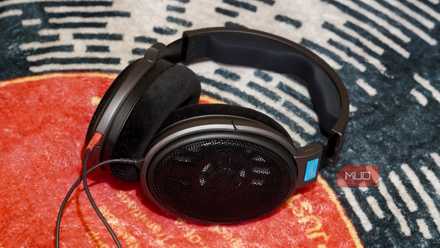
This is the one headphone model every audiophile should actually own
The Sennheiser HD 600 have been around for nearly three decades, and they're ubiquitous for a reason — these are balanced, value-friendly open backs.
Balanced cables have an extra conductor
A third conductor cancels out the noise that gets inside a headphone cable

Electromagnetic interference affects all kinds of unbalanced digital audio sources, but we rarely notice it. That's because a proper DAC or amplifier is usually needed to hear the effects of interference. When you start getting into critical listening with the right gear, it's something to think about. A standard 3.5mm auxiliary cable is unbalanced. It uses two conductors — a signal and a ground — to transmit audio data from your source to your outputs, like headphones or speakers.
With just one signal and one ground conductor, regular 3.5mm headphone cables are susceptible to electromagnetic interference. This is especially true with longer cables or cable runs that span a long distance. Balanced cables address this issue by adding a third conductor. Instead of sharing a single ground between the left and right audio channels, balanced cables give each channel its own ground. There are positive and negative conductors, plus the ground.
The positive signal transmits the sound through the balanced audio cable, like a standard cable. The difference here is the negative signal, which is the same audio information in the opposite polarity. At the end, the negative signal is flipped, and a technique called common-mode rejection (CMR) is used. This process helps balanced audio cables and sources filter out unwanted electromagnetic interference for a cleaner sound.
Here's how common-mode rejection works. The audio signal is sent over two cables with signals of opposite polarity. The actual sound information is identical, it's just flipped on the negative conductor. When an amplifier, speaker, or a pair of headphones receives the two inputs, it amplifies the difference between them. Anything that is duplicated across both conductors is automatically ignored. Interference, like hums or hisses, affects the positive and negative conductors. So, by only amplifying the signals that are opposites, the electromagnetic interference is canceled out.
You need the right headphones for balanced audio
A pair of headphones with a single wire won't cut it
Trying balanced audio for yourself usually involves more than simply buying a new cable. You need a balanced cable, audio source, and headphones for everything to work. You should not use adapters to simply plug unbalanced cables into a balanced output. If your amplifier uses a differential output, using an adapter might overload it, causing damage. In other words, those that care about using balanced outputs should invest in the right gear from the beginning.
I tried review units of the Fiio FT13 headphones and K15 amplifier to take balanced outputs for a spin. You don't need to use this model of headphones to use balanced cables, but you do need headphones with detachable cables and a compatible internal wiring structure. Specifically, your headphones need to have separate cables with their own positive, negative, and ground conductors running to each channel. A traditional headphone with a single cable running to one side of the headphones usually can't be balanced.
This particular model achieves this with dual 3.5mm TRS headphone connectors on the headphone side. For the cable, you get an eight-strand braided cord that supports 3.5mm, 4.4mm balanced, XLR-4 balanced, and 6.35mm via included adapters. The dual headphone connectors and eight-strand design confirms that this is indeed a balanced cable. There are enough paths for the positive and negative signal wires to run to the left and right channels completely independently.
The 3.5mm jack is great, but balanced audio is better
More power, less interference, and better channel separation

The perks of balanced audio are tangible, but you should invest in other parts of your music listening setup before trying to achieve it. For instance, you should get a powerful DAC or digital audio player (DAP) with support for balanced outputs before buying headphones that come with a balanced cable. If you are bothered by static noise caused by electromagnetic interference, balanced cables can be a way of eradicating it once and for all.
I have many pairs of audiophile-grade studio monitors, but the Fiio FT13 were the first headphones I tried with a balanced output cable and adapters ready to go. As expected, the sound quality was good with no unwanted hums or hisses with the 4.4mm balanced plug in use. Still, the cost involved in building a balanced audio setup makes it exclusively reserved for audiophiles that want the best listening experience possible, and are willing to pay for it.
For everyone else, sticking with your wireless over-ears will be just fine.

Fiio FT13
- Brand
- Fiio
- Carrying case
- Yes
- Frequency range
- 20 Hz - 20,000 Hz
- Driver size
- 60mm Large Dynamic Driver
- Headphone Type
- Closed-back
- Audio jack
- 3.5 mm (adapters included)
The Fiio FT13 are a set of premium over-ear, closed-back headphones with large dynamic drivers. They come as a complete kit with swappable ear cushions, headphone jack and XLR adapters, and a protective carrying case. Each driver is powered by a dedicated 3.5mm TRS headphone connector, so you can use balanced audio cable or adapter.