


Google is definitely still one of the best search engines for finding the obvious answer, quickly. If I need a manual, a product page, a quick Wikipedia fact to cite, or the same Reddit thread everyone else is already reading, it gets me there fast.
What it doesn’t do so well is wandering. What happens to the rest of the internet? The odd little websites, old hobby pages, personal blogs, and pages created by people who don’t have the budget or patience to fight for SERP rankings?
To discover those quaint little corners of the internet that don’t make it onto page one of Google, I tried these lesser-known search engines, and what I discovered was a completely different internet.
Marginalia Search
The non-commercial web never really disappeared. Google just doesn’t look there



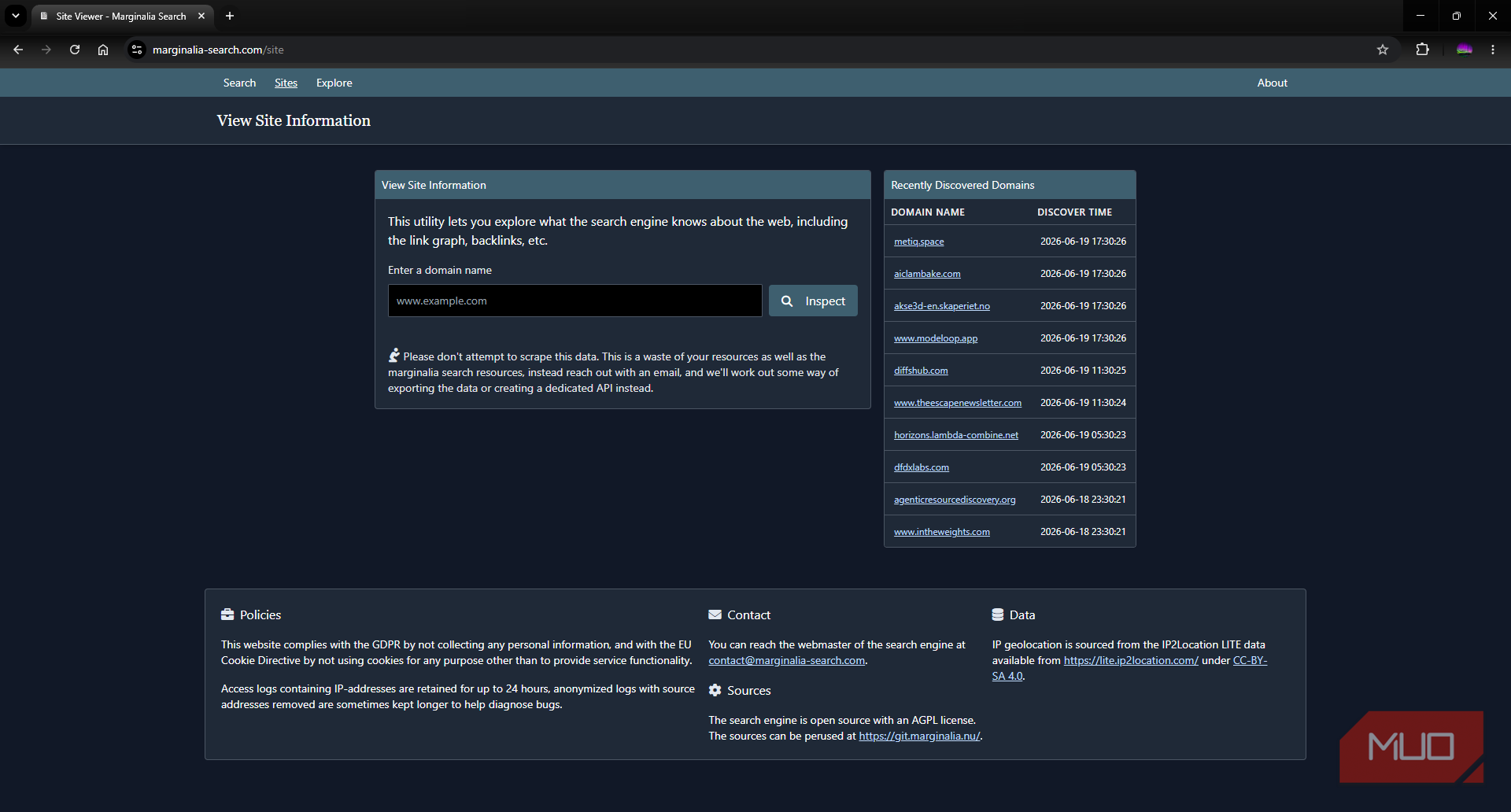
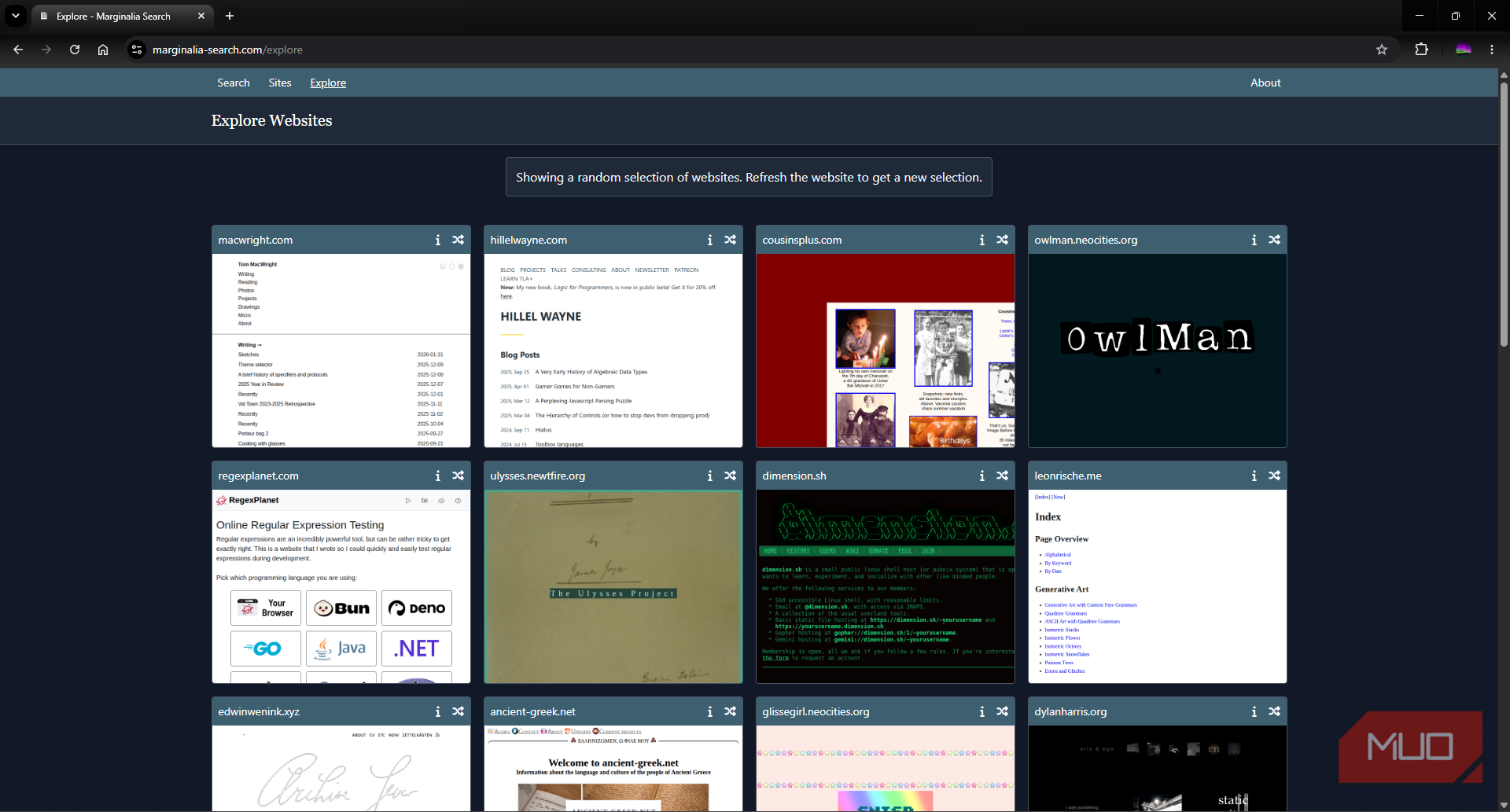
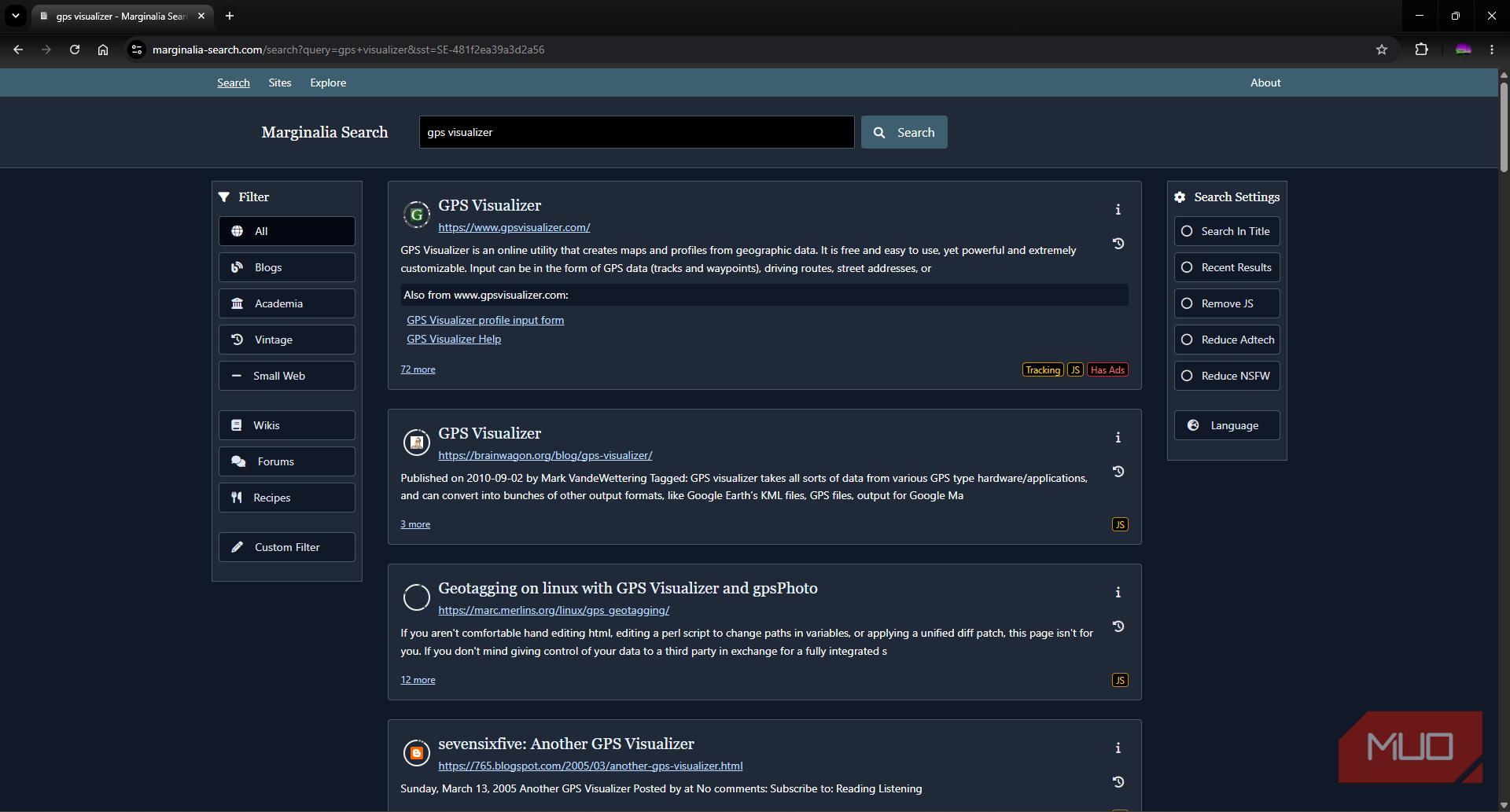
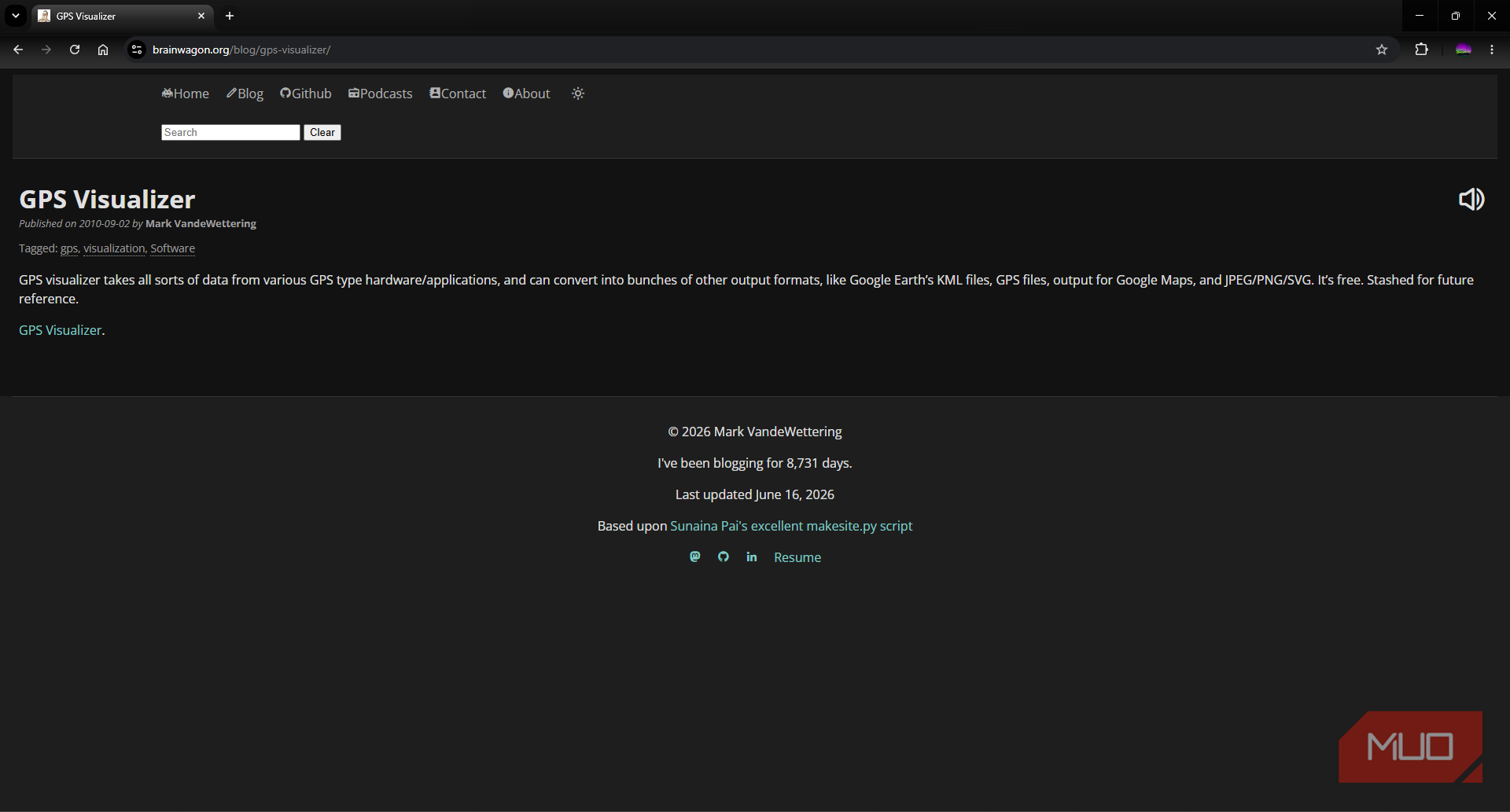


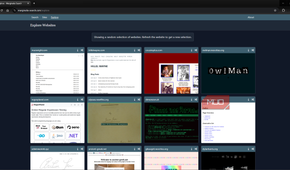


Marginalia Search is one of my all-time favorite search engines for finding the parts of the Internet that turn up around page 2000 of a Google Search. It’s what I use to find smaller sites, personal pages, niche writing, and the fascinating little projects that people create that were designed to please a search algorithm.
It’s certainly not a search engine I would use to find answers fast, but it’s the one I use when I want to find and read content written by someone who cares far too much about a topic I happen to also be interested in.
What I love most about Marginalia is how human the results are. That’s because it surfaces content that’s not been written by a copywriter with SEO ambitions, but by regular people who want to share their world with the internet.
On Marginalia, you’re more likely to find:
- Personal projects and very old-school websites.
- Essays, notes, and hobby pages.
- Non-commercial pages from people with very specific obsessions.
Search for niche phrases rather than broad sweeping terms. Marginalia works best when the query sounds like something a real person cares about.
Wiby
This is what searching felt like before everything became optimized








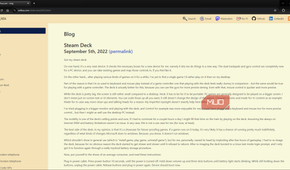
Wiby is pure nostalgia, and I absolutely mean this as praise. It doesn’t feel like a modern Google alternative. It’s not even in the same league. Wilby is lightweight, and it’s built for a handmade web that existed before every page just had to be a sales funnel.
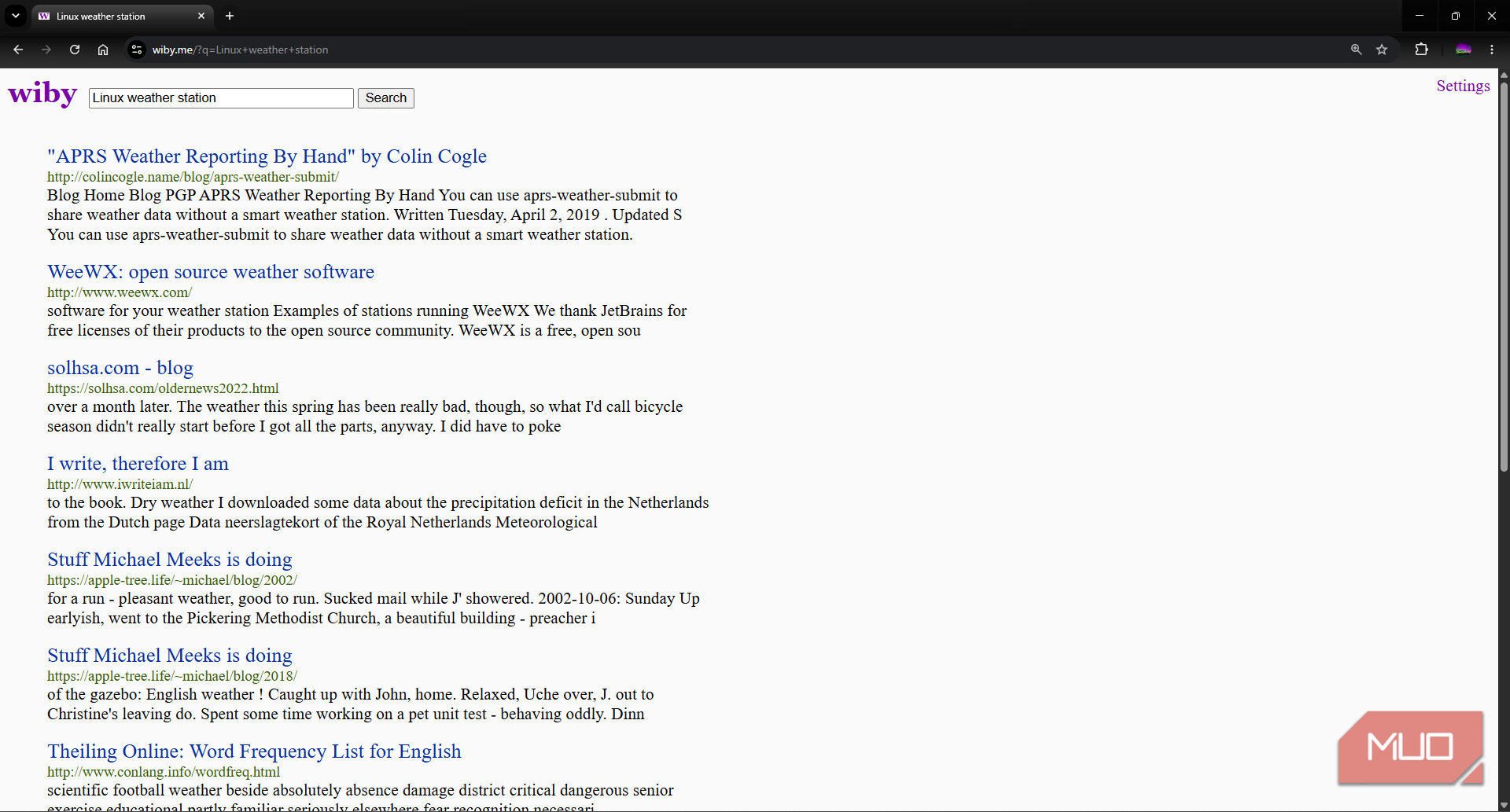
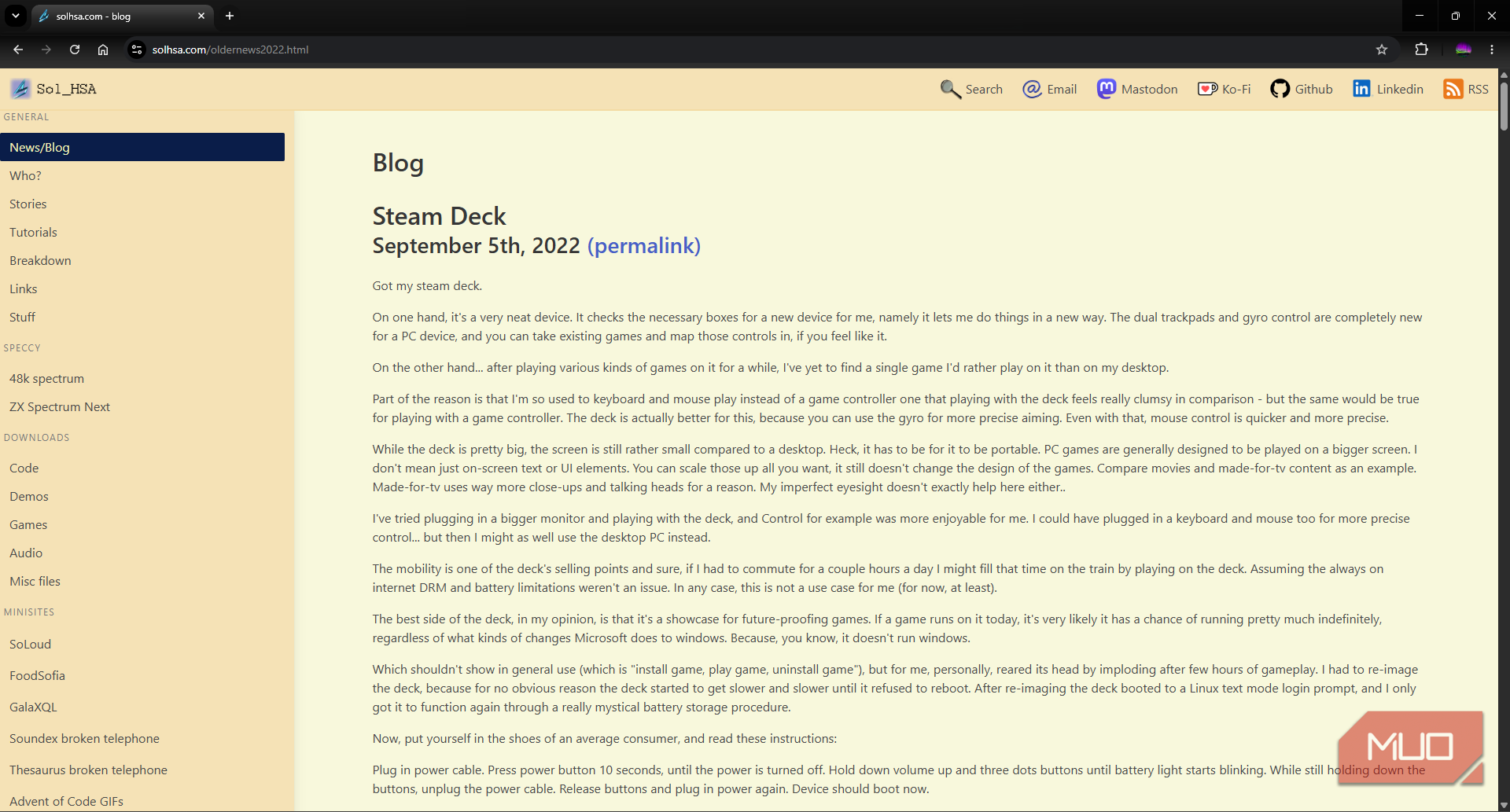
The results come back looking plain and dated, sometimes wildly off-topic, and even unfinished. That’s why I love it. Wiby reminded me that the old web wasn’t always beautiful, but it was personal. I use Wilby specifically to find projects created by HAM radio clubs, especially technical webSDR projects.
Use Wiby to find:
- Lightweight pages with super simple layouts.
- Technical and hobby projects that care more about content than HTML effects and CSS.
- Hand-built websites on everything from theology to astronomy.
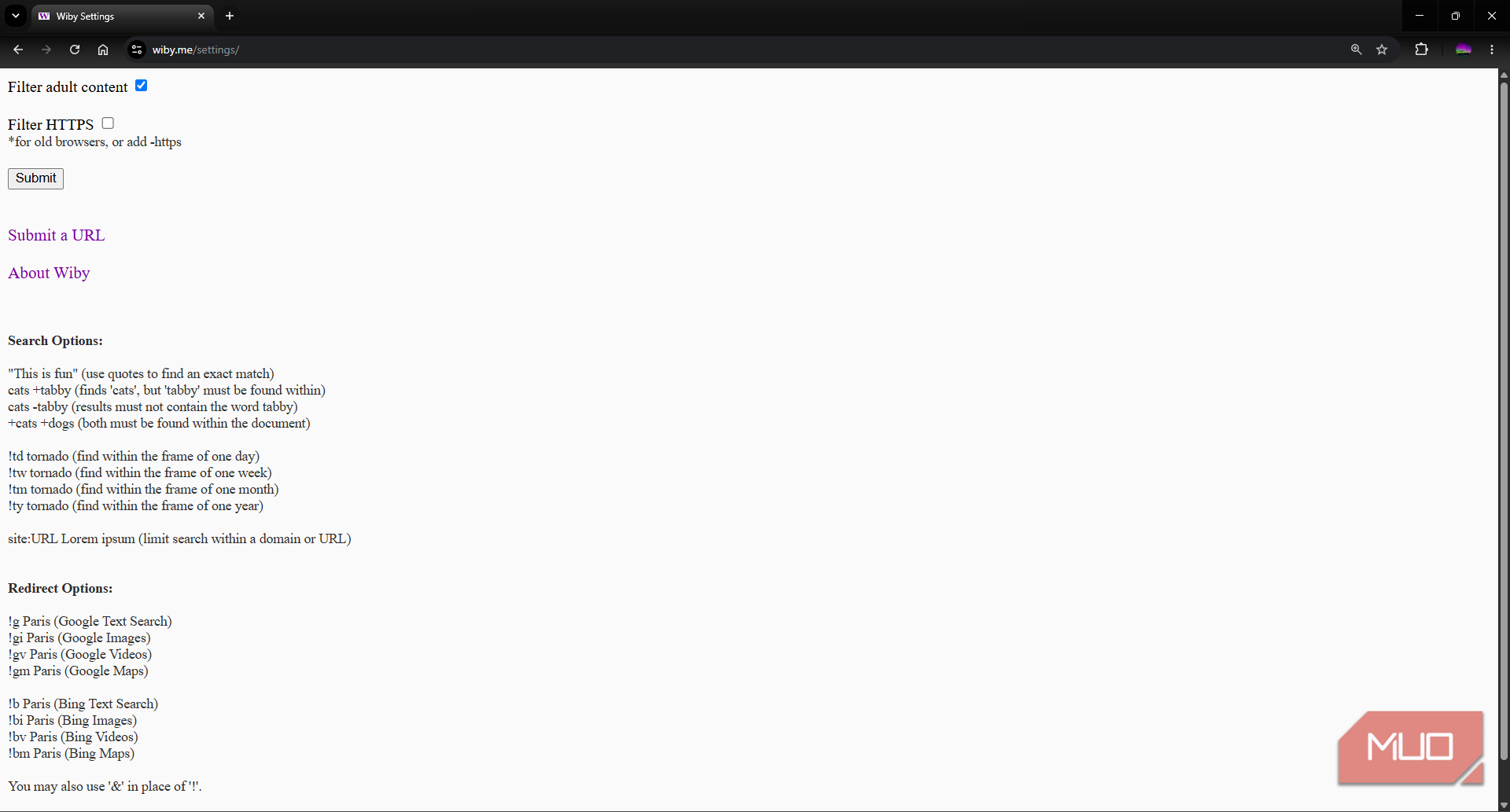
Wiby has some basic search operators, like +word for required terms, -word to exclude specific terms, and site:URL to search within a specific site.
Million Short
Removing popular websites changes the whole mood of a search


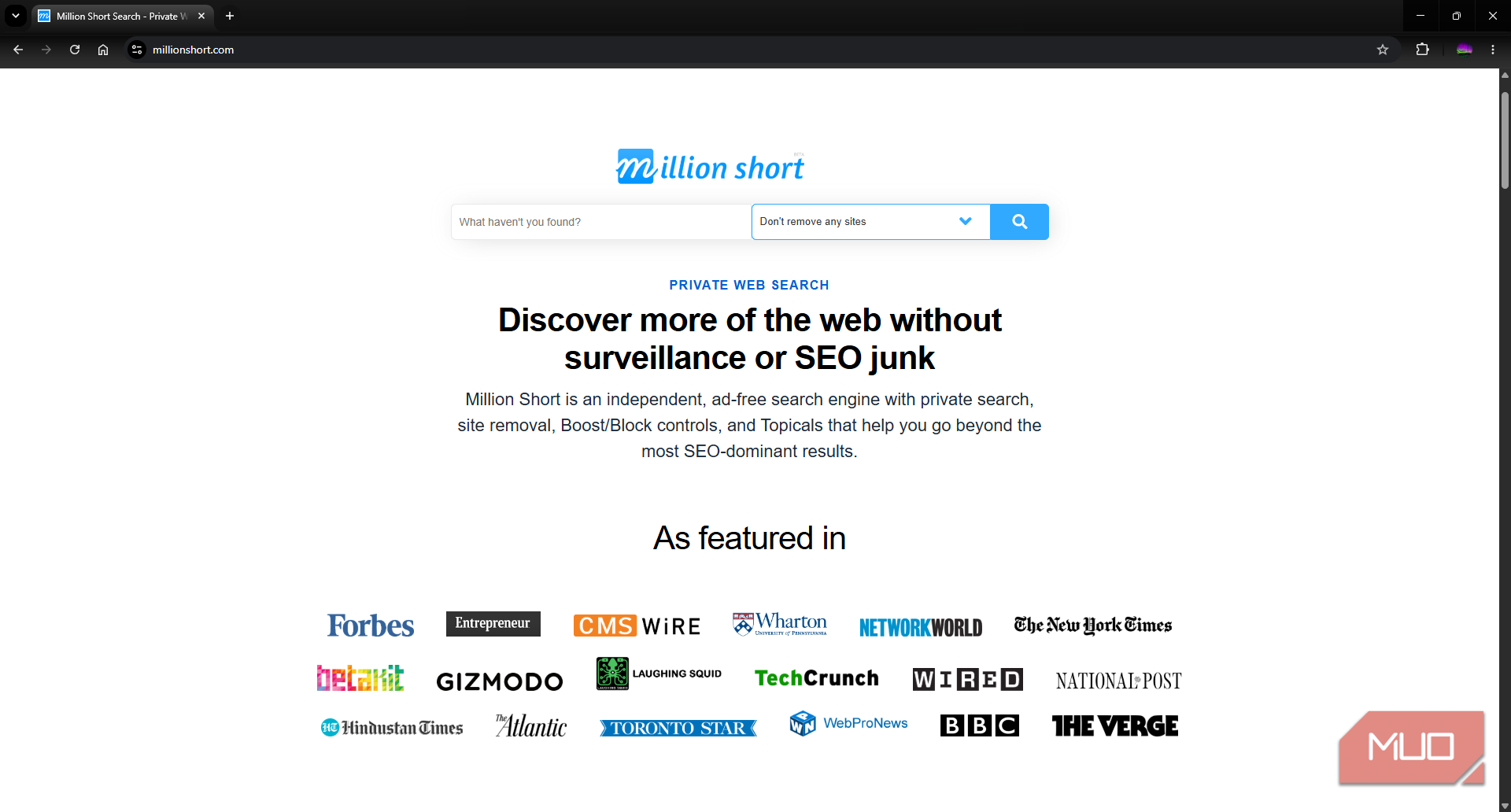
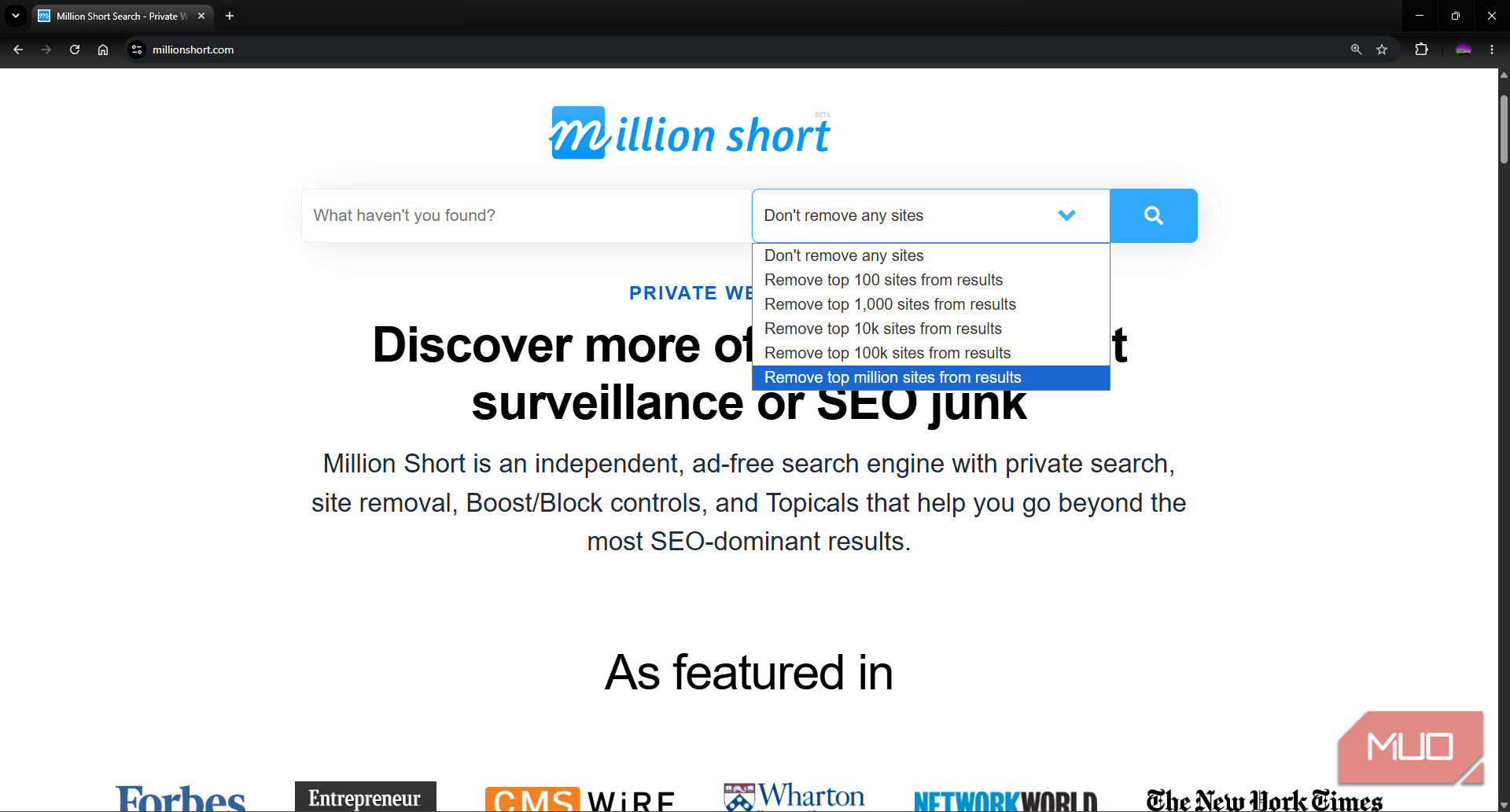
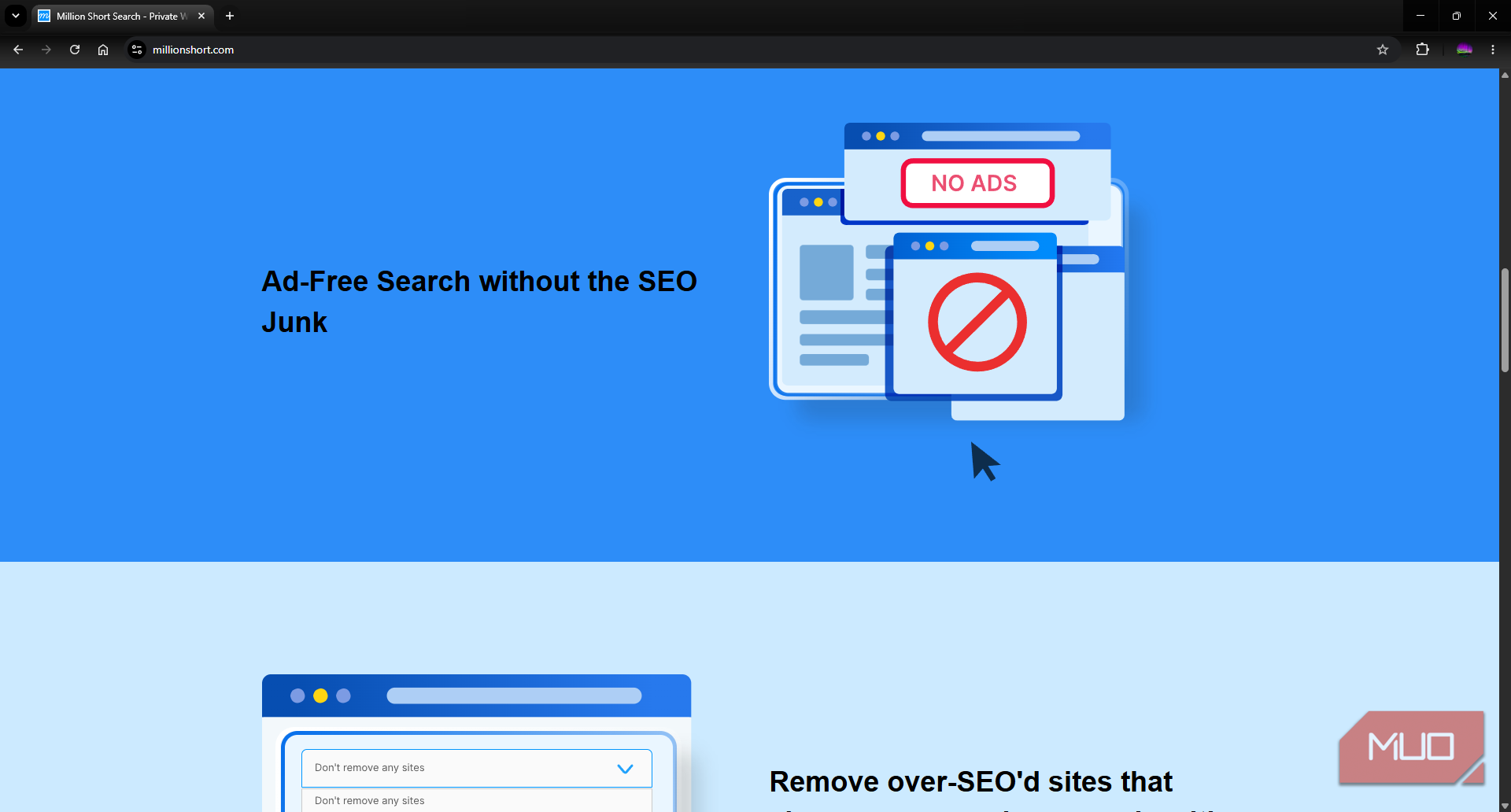
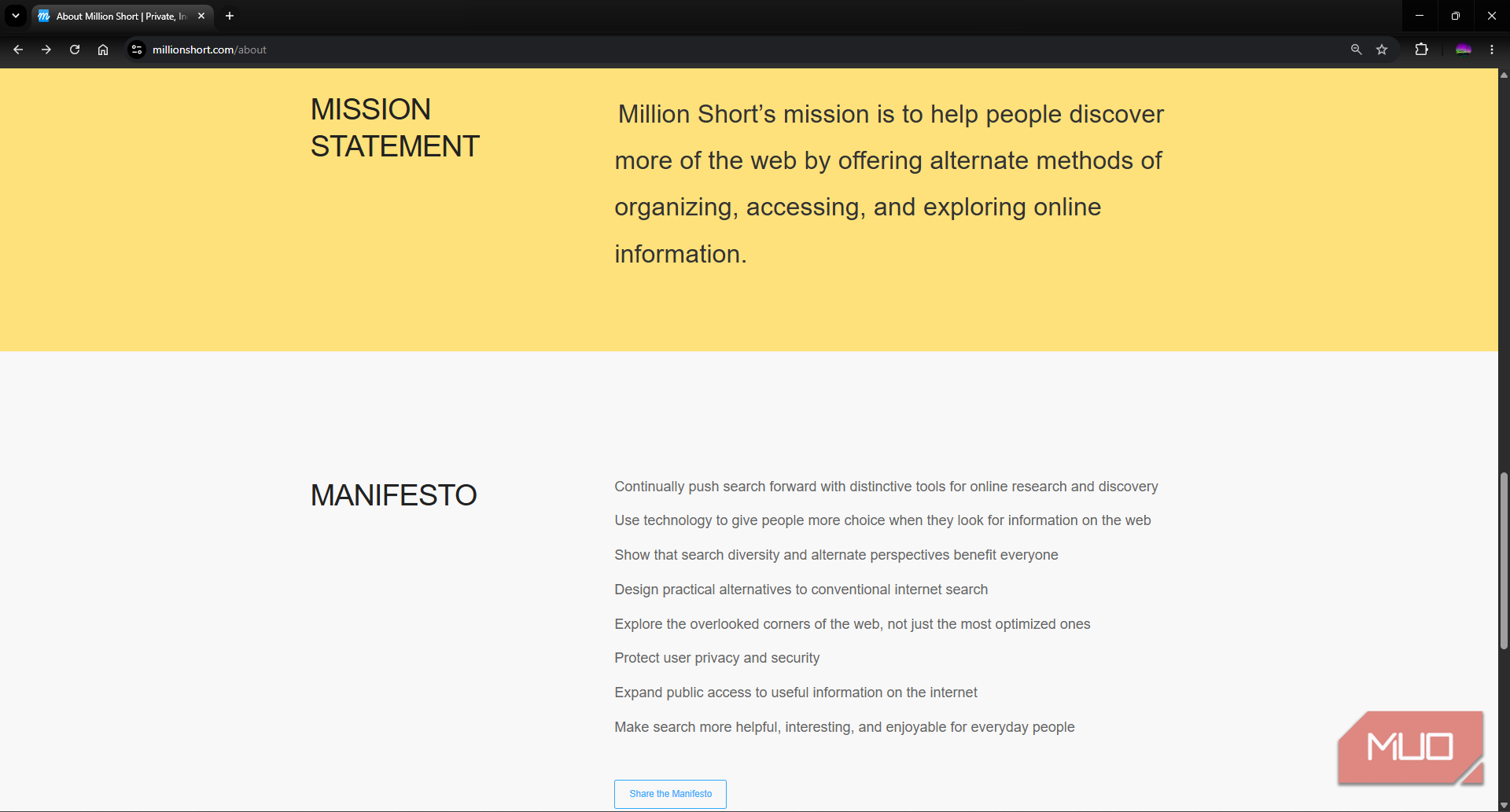
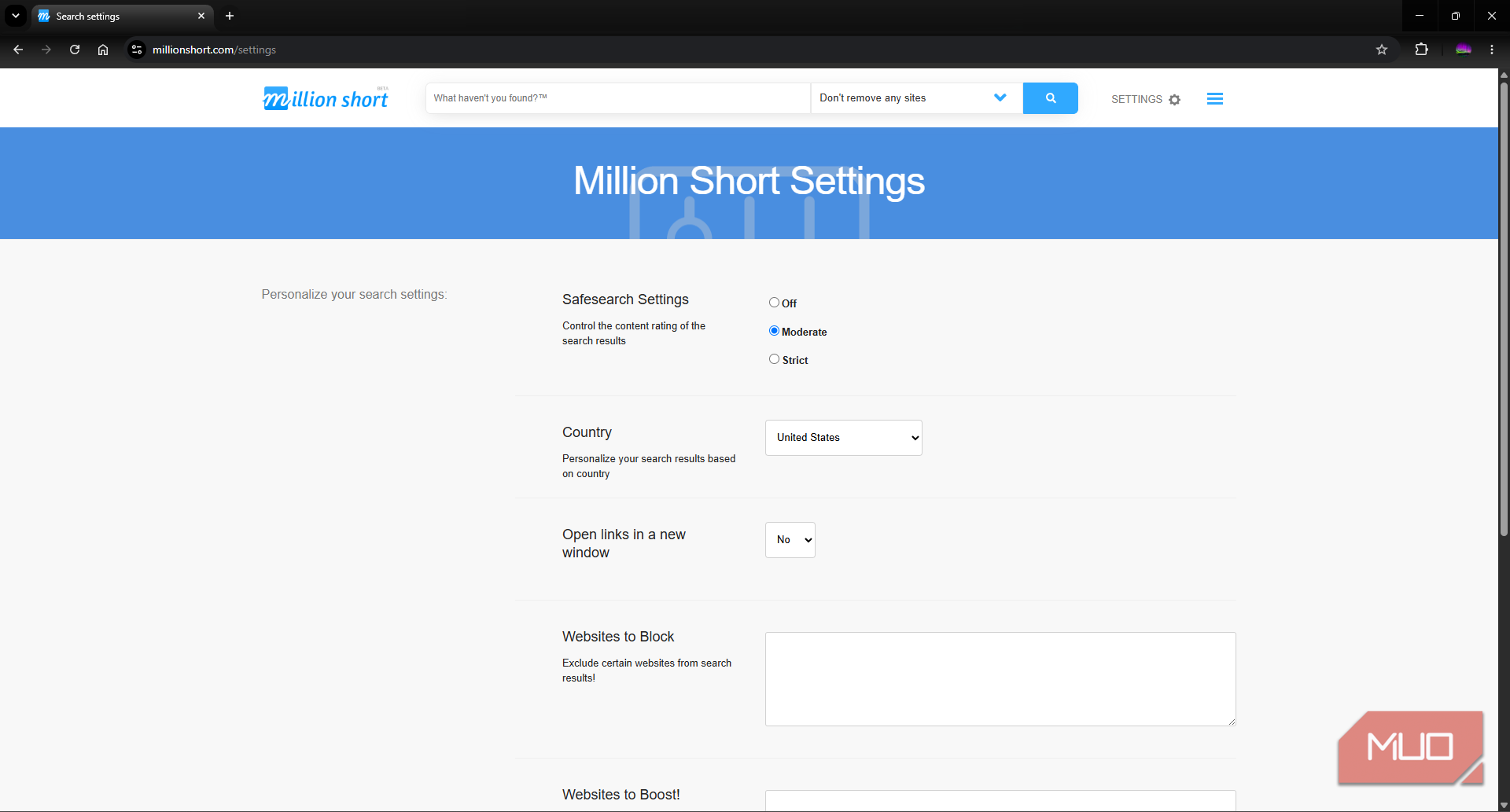
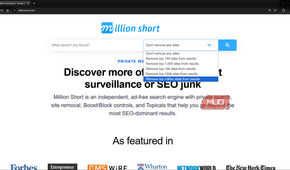
The paid search engine Million Short probably has the best gimmick on this list. That’s because, instead of trying to beat popular websites, it just lets me remove them. I can cut out the top million sites, or fewer, if I don’t feel like being so selective. Once these are out of the equation, a whole internet opens up that feels stranger and way less predictable.
Cutting out popular sites first does seem counterintuitive. After all, they’re popular precisely because they give the best answers. If I am trying to fix a specific Linux error, I probably want major forums, Stack Overflow, and all the other sites AI has quietly killed off. But the point of Million Short is to remove SEO articles first, the types of articles that offer to fix my Linux error by funneling me into a call with salespeople or downloading some lead magnet.
Its no-tracking, SEO-free angle makes searching online feel like getting the results once the loudest platforms have stopped screaming in your ear. Here, you’re more likely to find:
- Small blogs that review obscure tools.
- Niche guides and fixes that get buried below the big forums.
- Highly-focused topicals in nice categories like business, tech, and lifestyle.
Start by removing around 10,000 sites rather than one million, then increase the filter until you hit the sweet spot.
Search My Site
Personal websites are easier to find when the index starts there


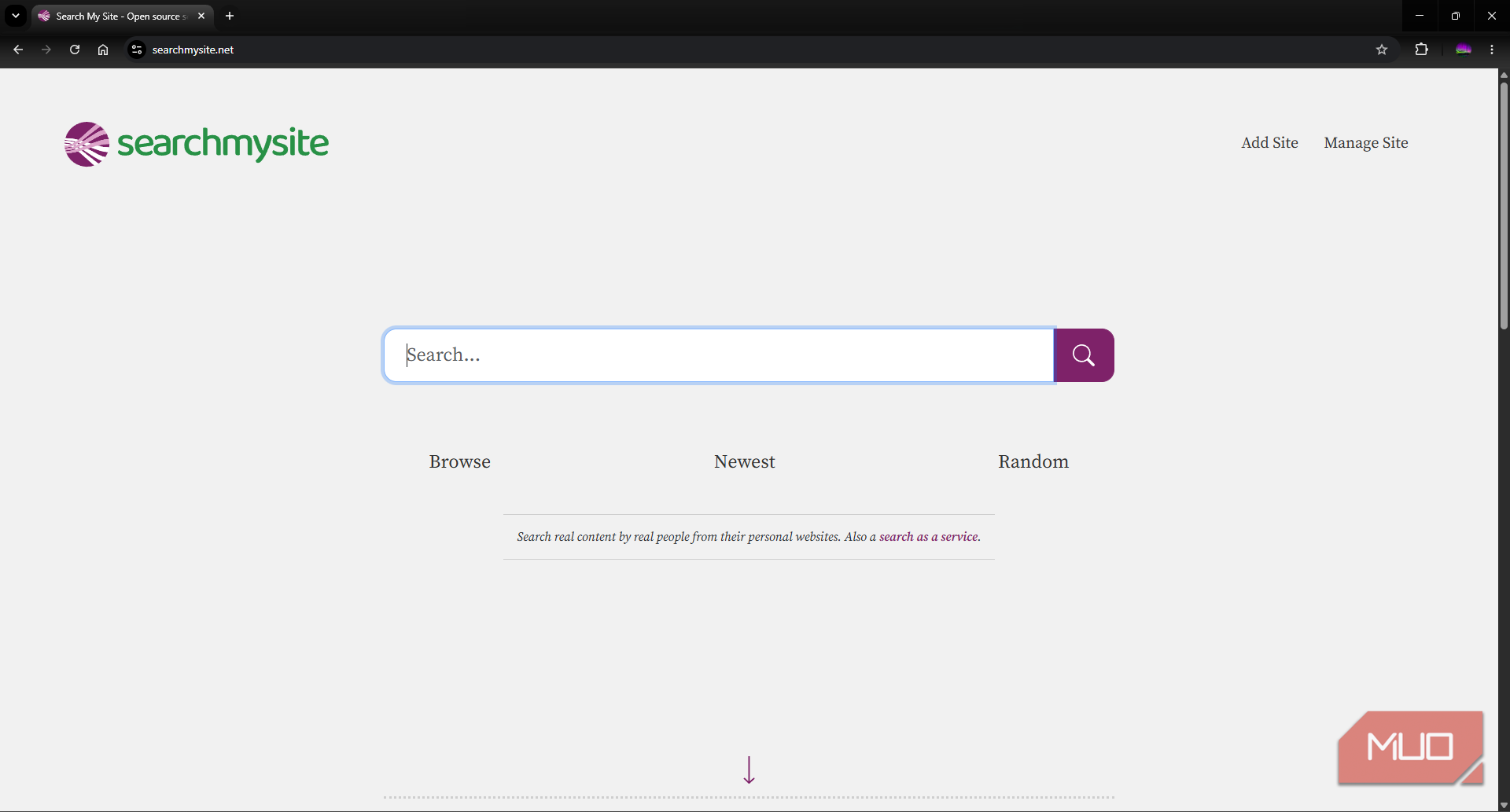
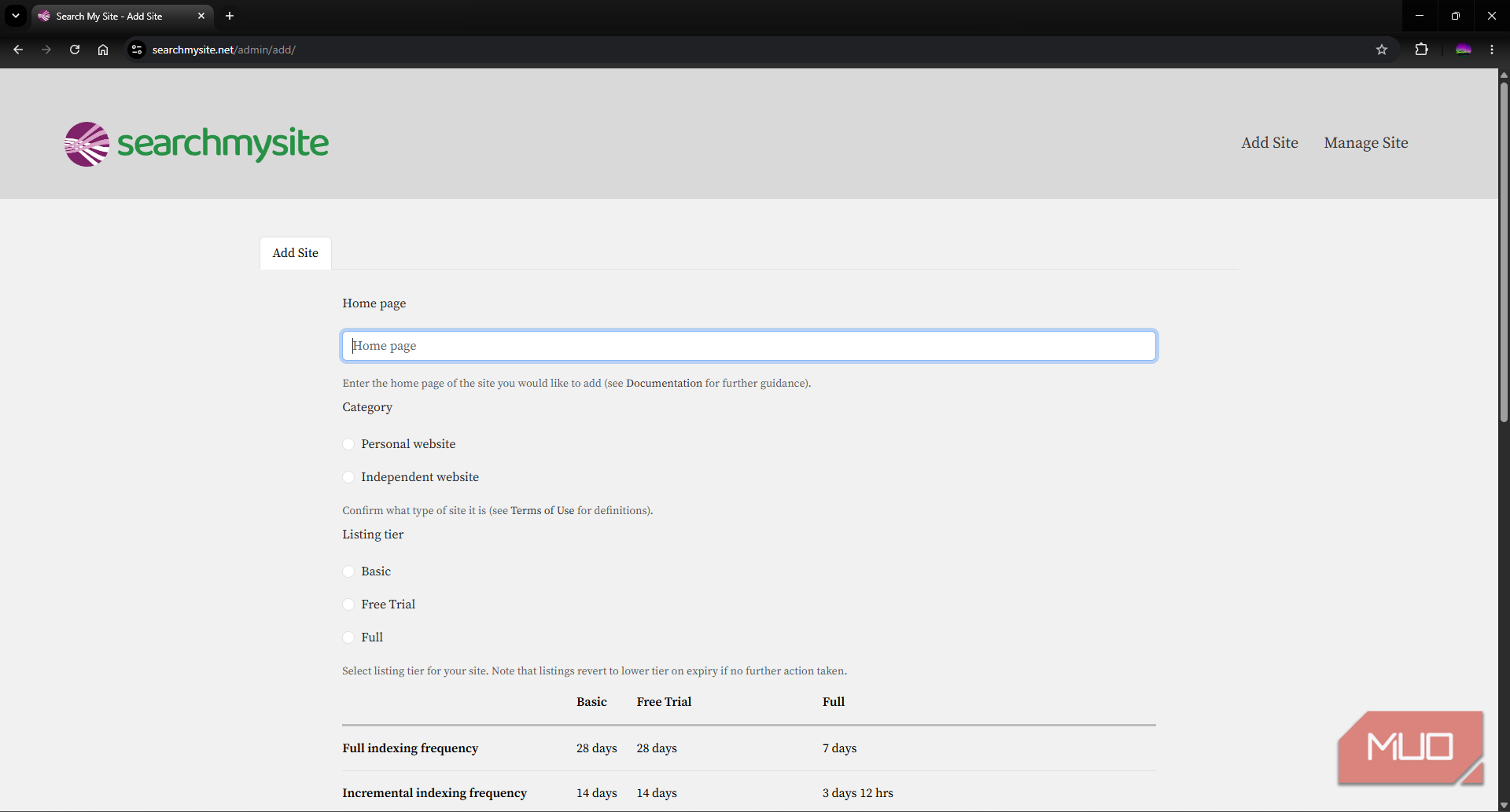
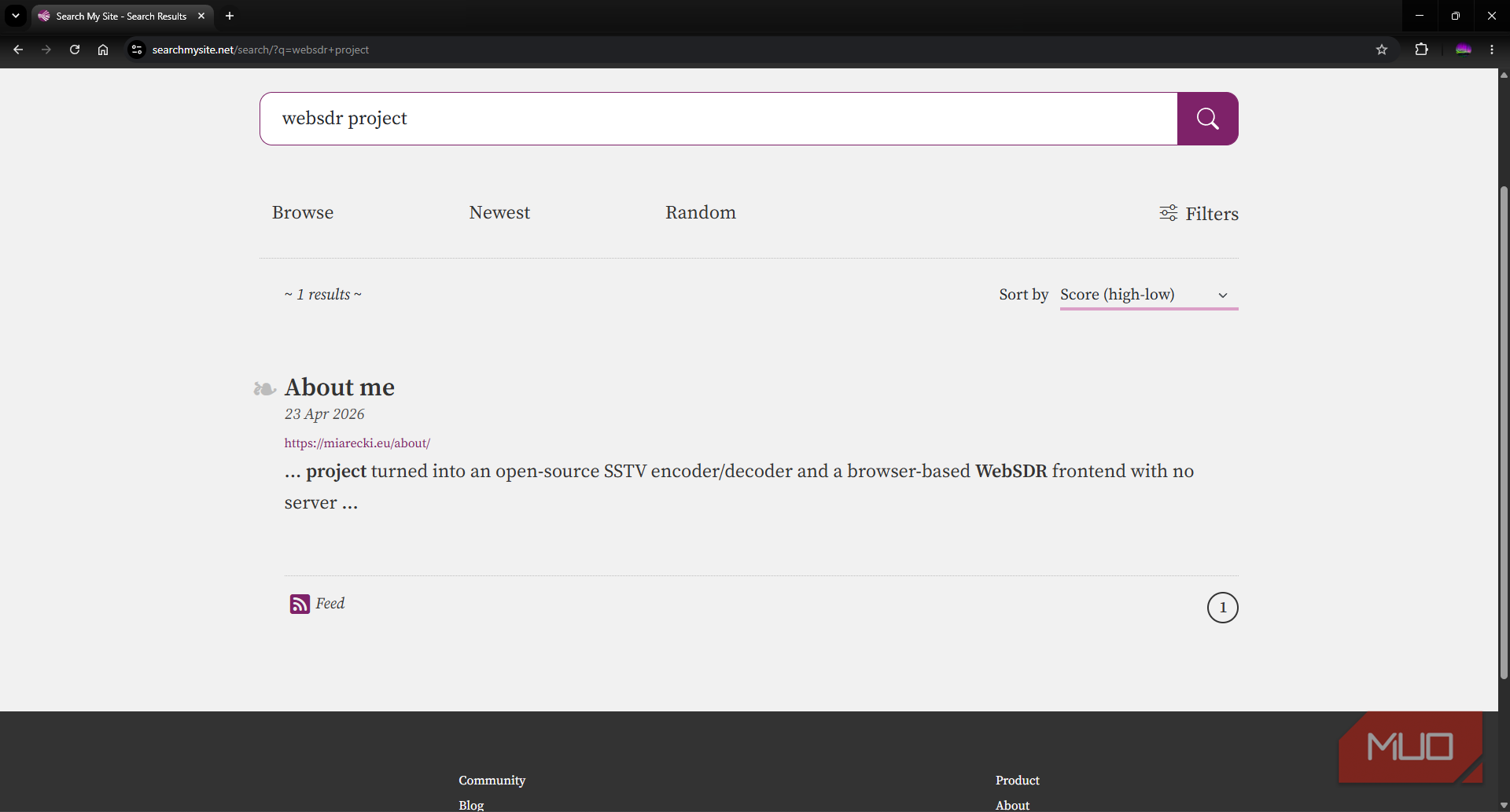
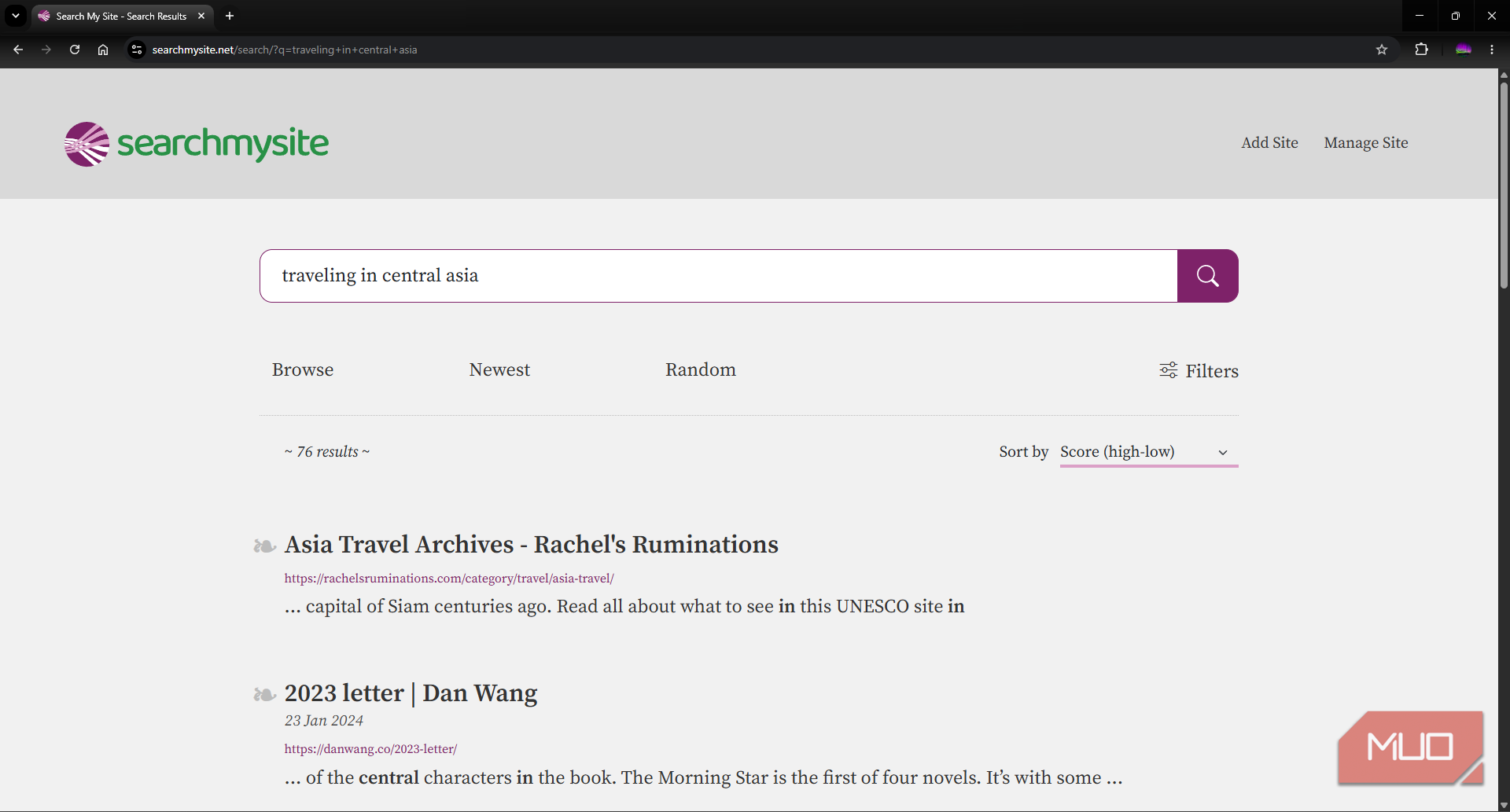






Search My Site is where I look when I need to find writing, not content. That’s because it doesn’t search the entire internet, but rather, just personal and independent websites. That sounds like a limitation, and in a way it is. But by narrowing its search pool to purely personal blogs and websites, I end up finding raw human-written content with no ulterior motives.
Whereas the big search engines like Google and Bing exist to find the best results to answer keyword searches, Search My Site feels better at finding pages where someone is working through an idea or leaving notes that I just happened to stumble across. It’s messier, yes, but it’s far more honest.
Search My Site is likely to find:
- Digital gardens with half-finished content are still useful.
- Personal write-ups about old hardware and niche tools.
- Independent blogs, the authors' genuine aspirations for.
Since you’re searching for personal pages, using human phrasing like “why I switched,” “my setup,” or “what I learned” will get better results.
Mwmbl
Community search feels rough, and that’s exactly why it belongs here


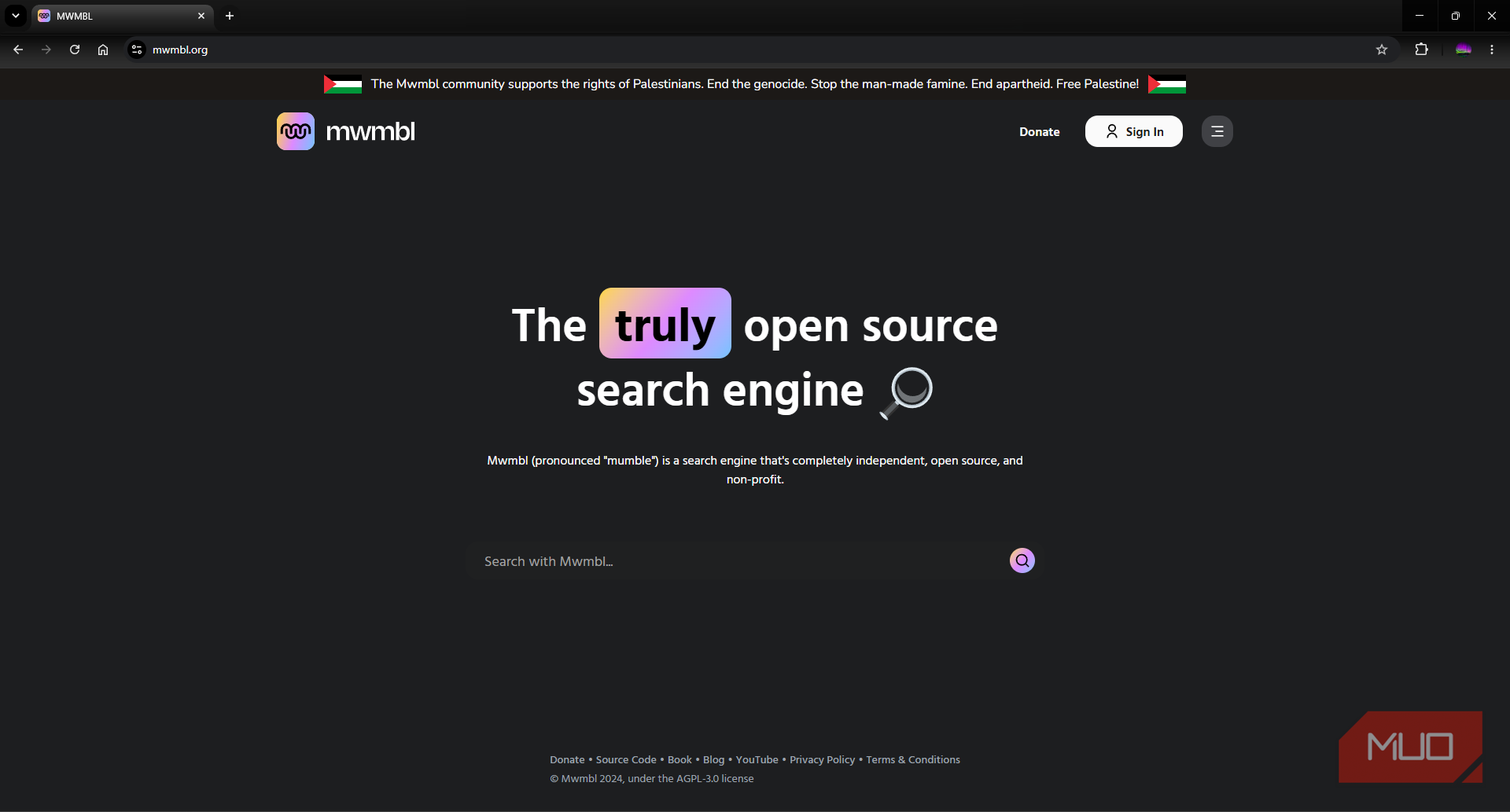
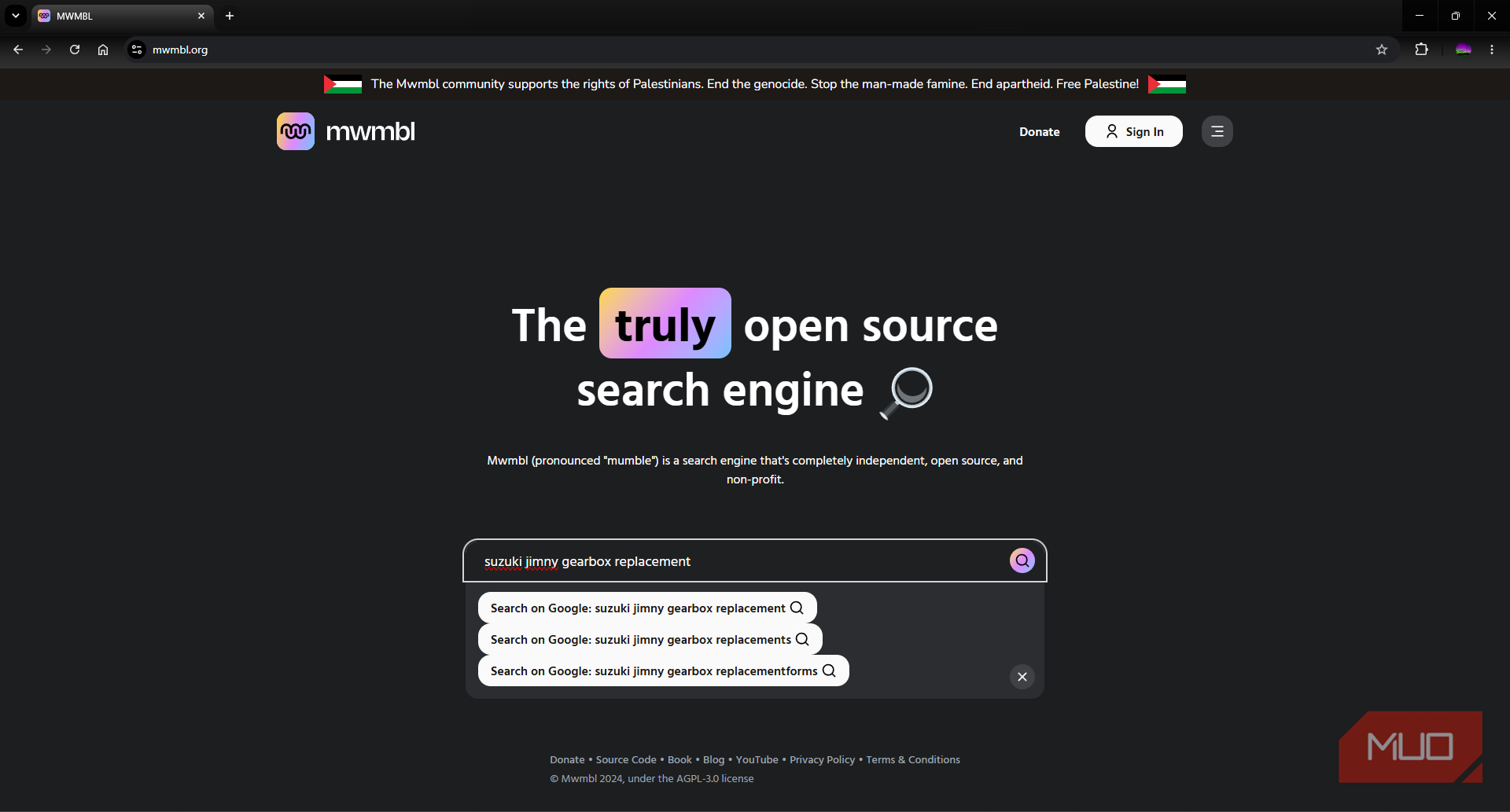
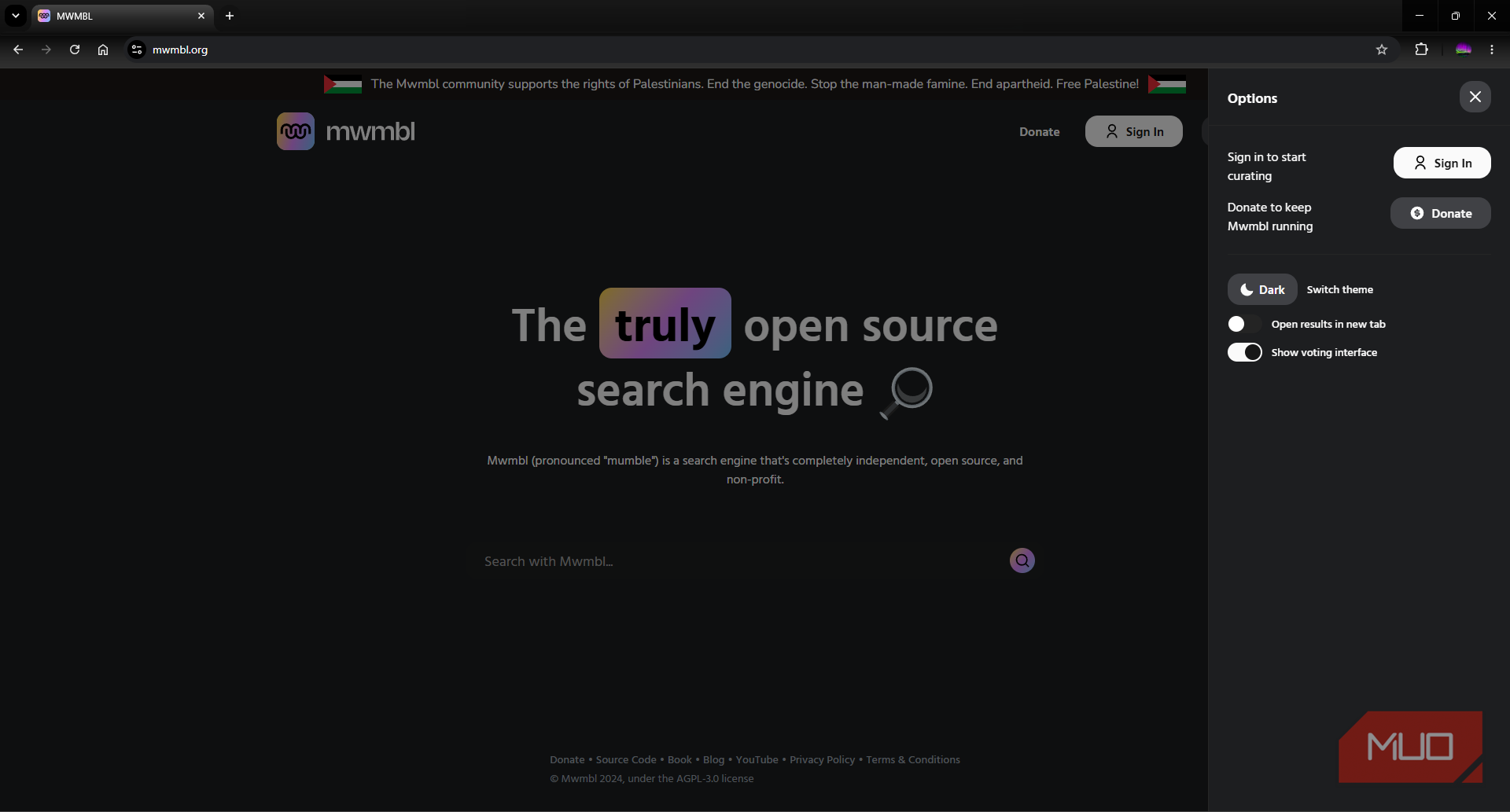
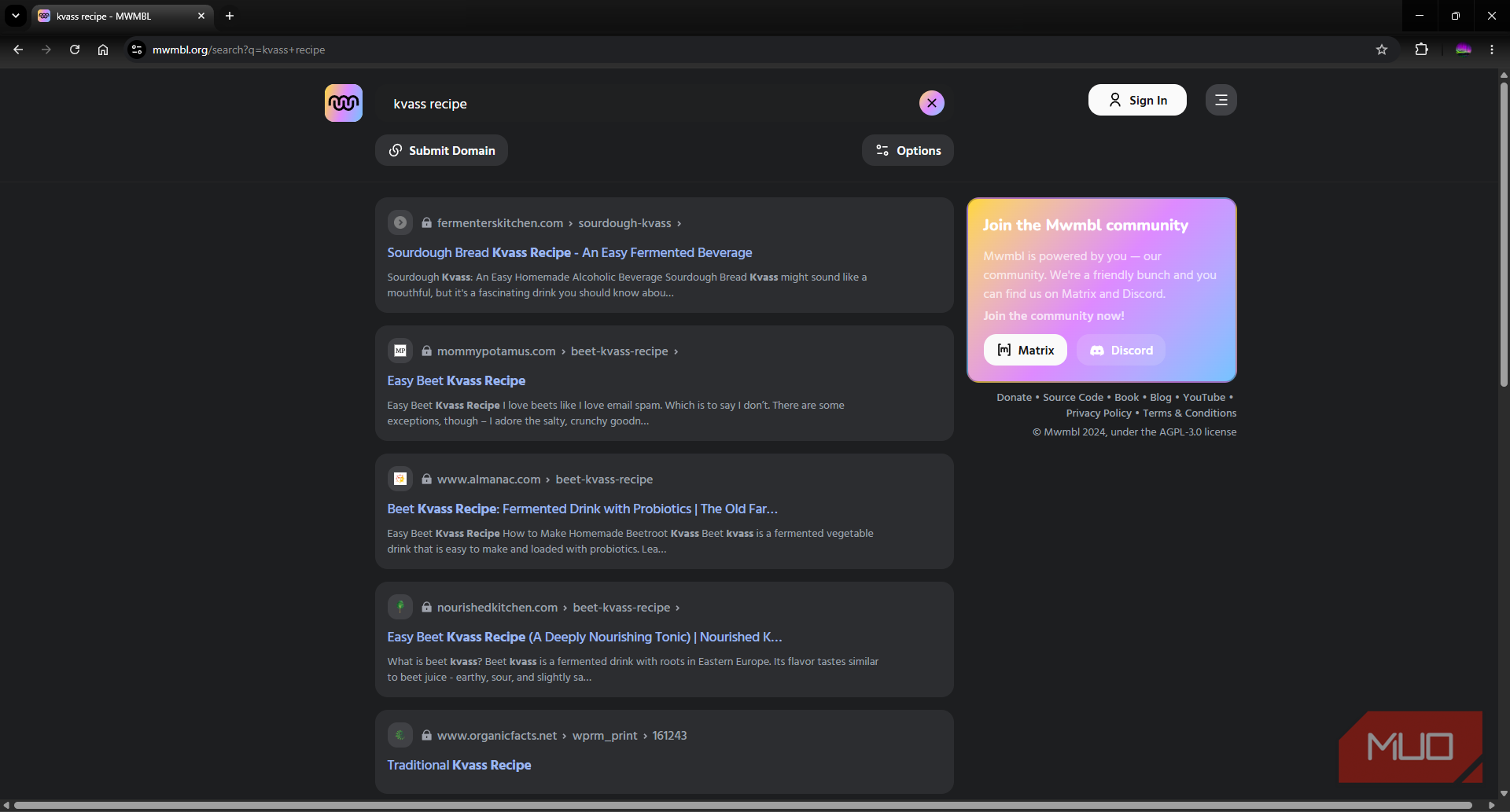
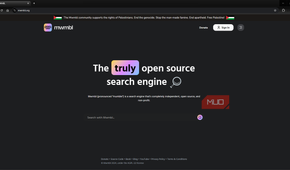
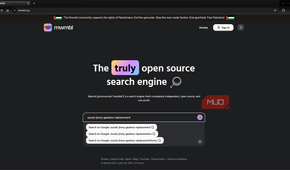
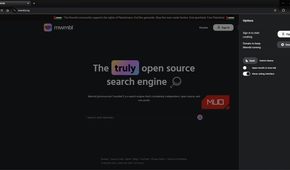
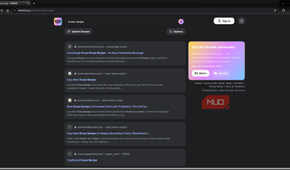

Mwmbl is probably the most experimental search engine I’ve ever tried, and it seems to wear that title proudly. It’s completely open-source, non-profit, and built around the idea that rankings should be guided by the people who use them rather than advertising or a giant commercial machine.
To be fair, Mwmbl does tend to come back with some interesting results that aren’t always perfect, and it does feel a bit rough to use. Many searches are weirdly uneven and definitely don’t give a clean answer the way Google or even AI search engines do.
That roughness is actually why I tend to like it. It feels like a search engine that’s still under construction, being built by the public rather than advertisers. Because of the community-driven approach, Mwmbl will surface content like:
- Open-source projects and technical pages that don’t make the cut on Google.
- Smaller sites that are crawled by users and improved over time through user involvement.
- Pages at the top that are there because other users just like me clicked on them.
Treat Mwmbl like an experiment rather than a clean answer. Try it when searching for niche technical, open-source, and independent projects. If you love a result, give it a nudge using its ranking tools.
Mojeek
The most normal search engine here, but it’s still weird


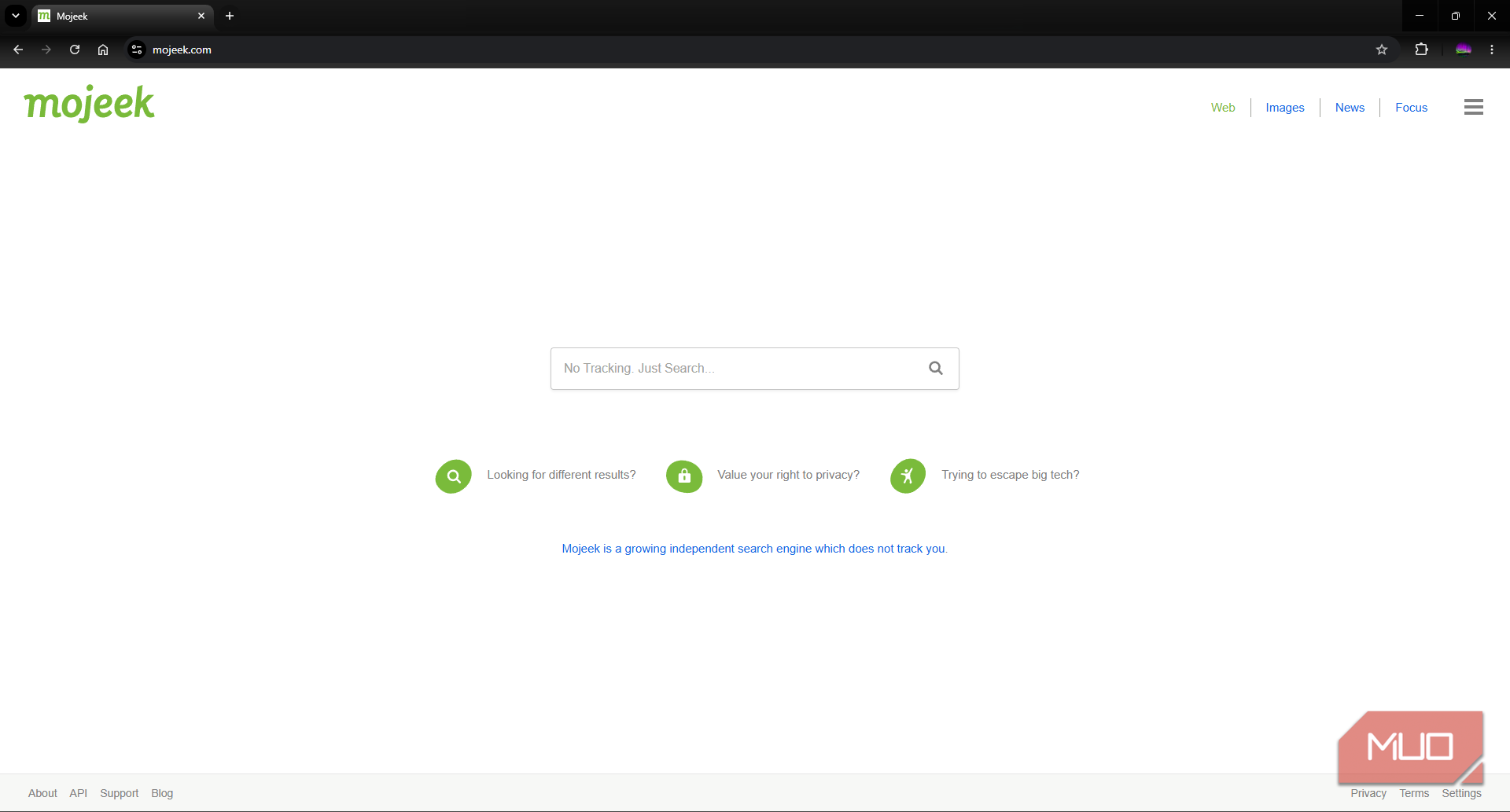
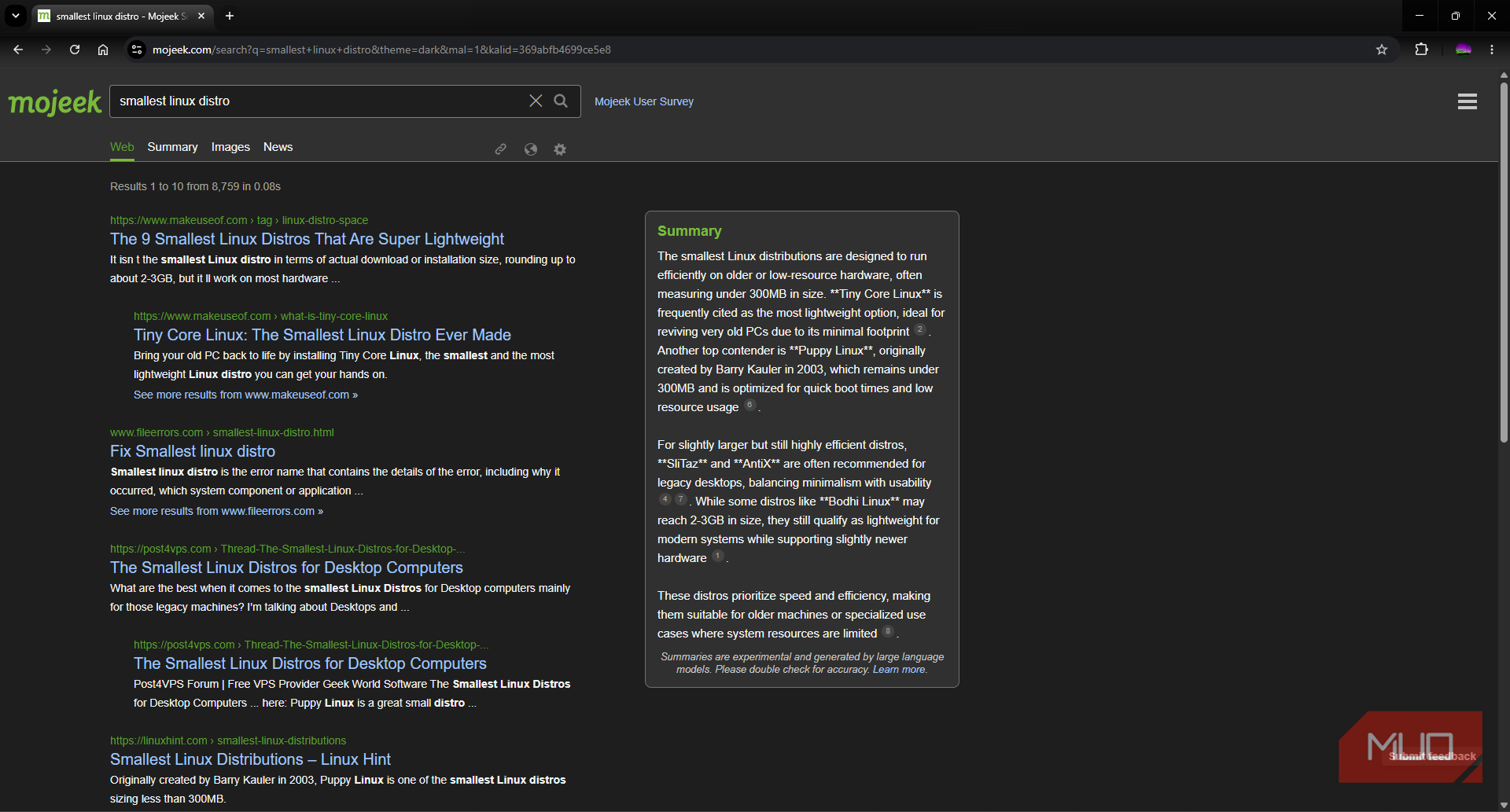
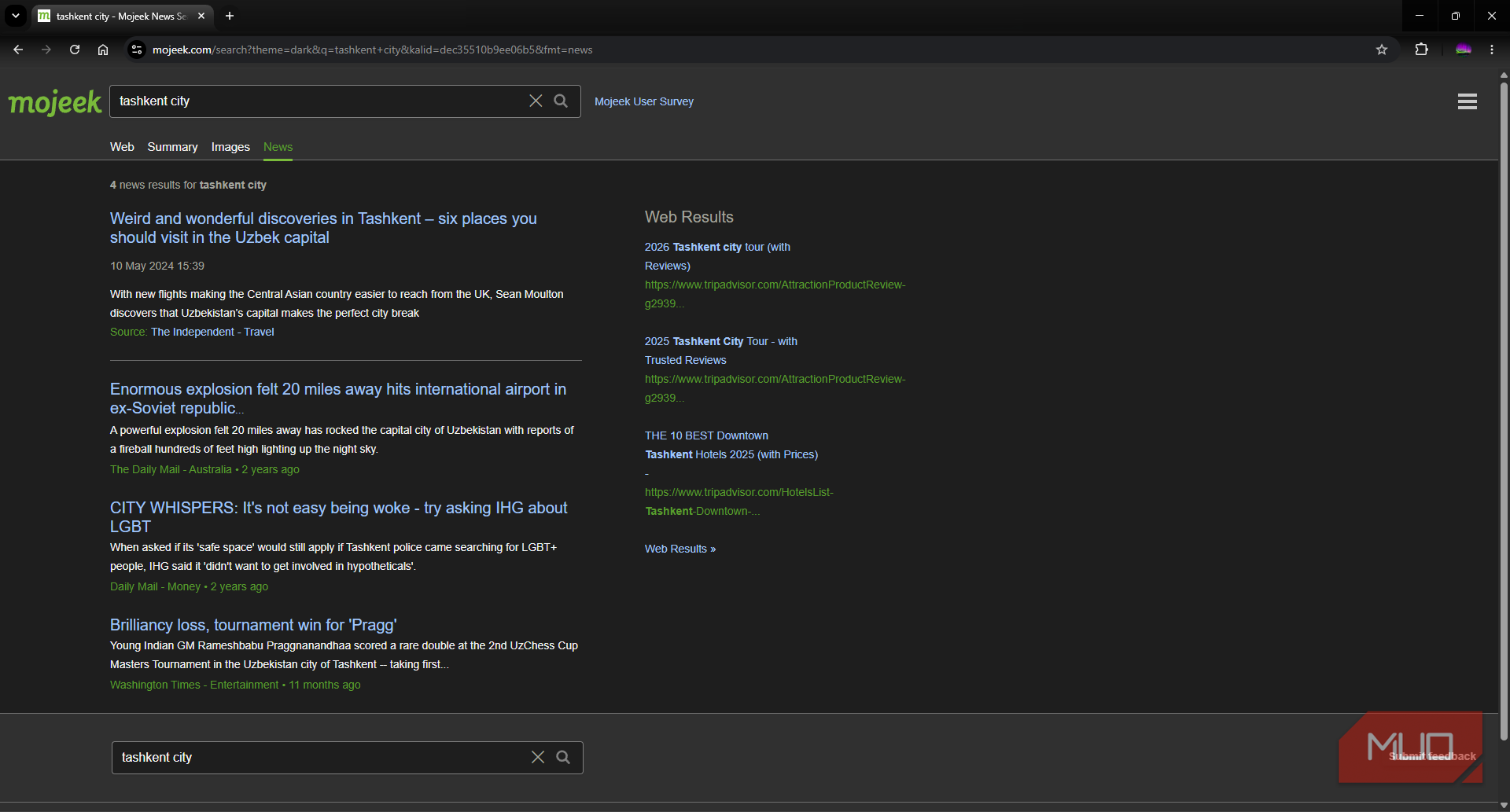



Mojeek looks and behaves more like what I am used to from Google, but it belongs here for the simple reason that it has its own crawler and indexer. That’s an important feature, because many alternative search engines actually just use another company’s results.
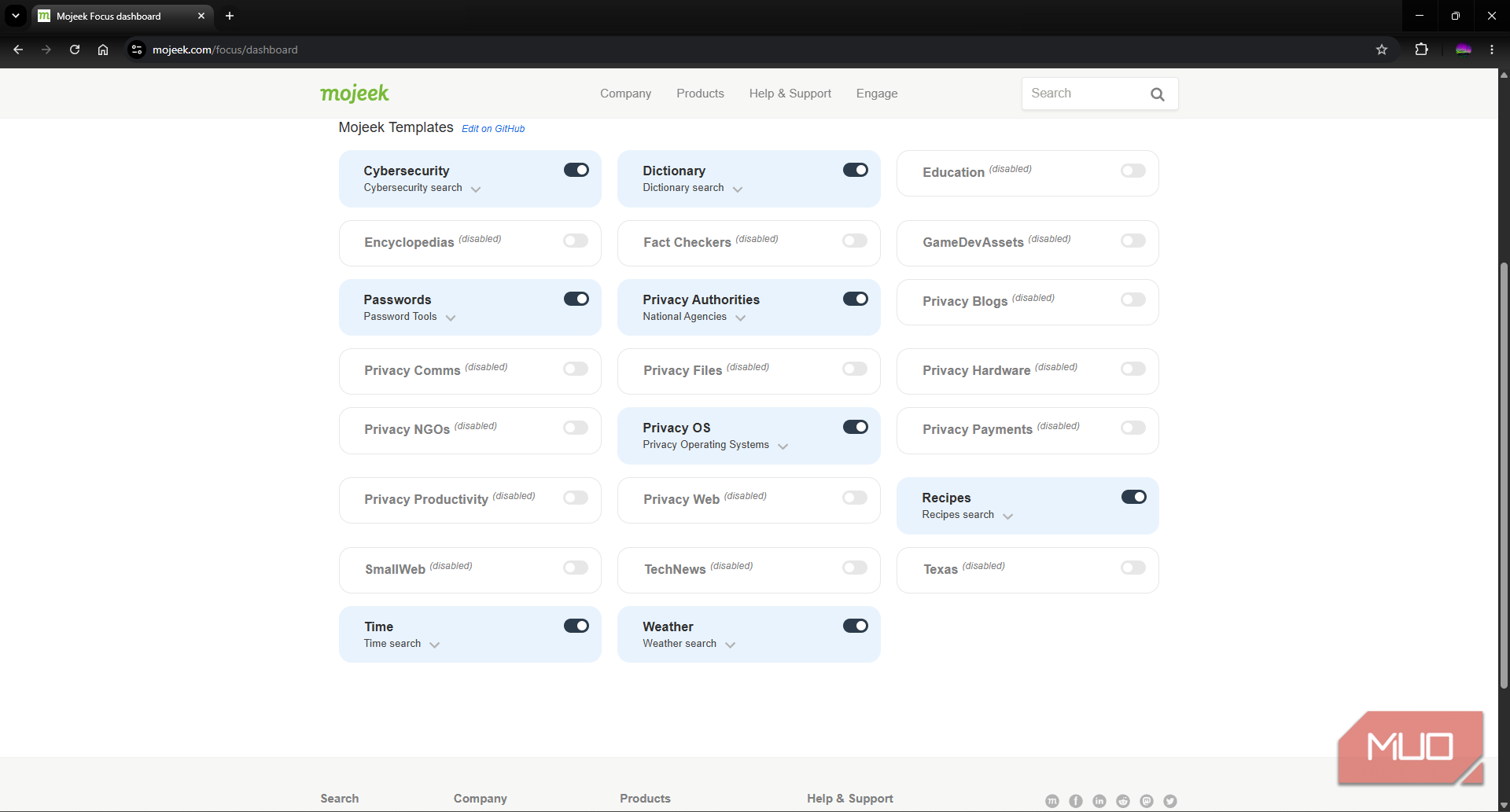
Mojeek’s greatest feature, in my opinion, is its Focus Templates. Instead of only accepting one giant index as it is, you can use these templates to search within pre-defined sets of sites. That means I can treat it like a normal search engine, but tighten up the search tool to just focus on specific sources I want.
For this reason, it’s become one of my favorite search engines when I’ve had enough of looking at pages of advertisements disguised as content. I use it to find:
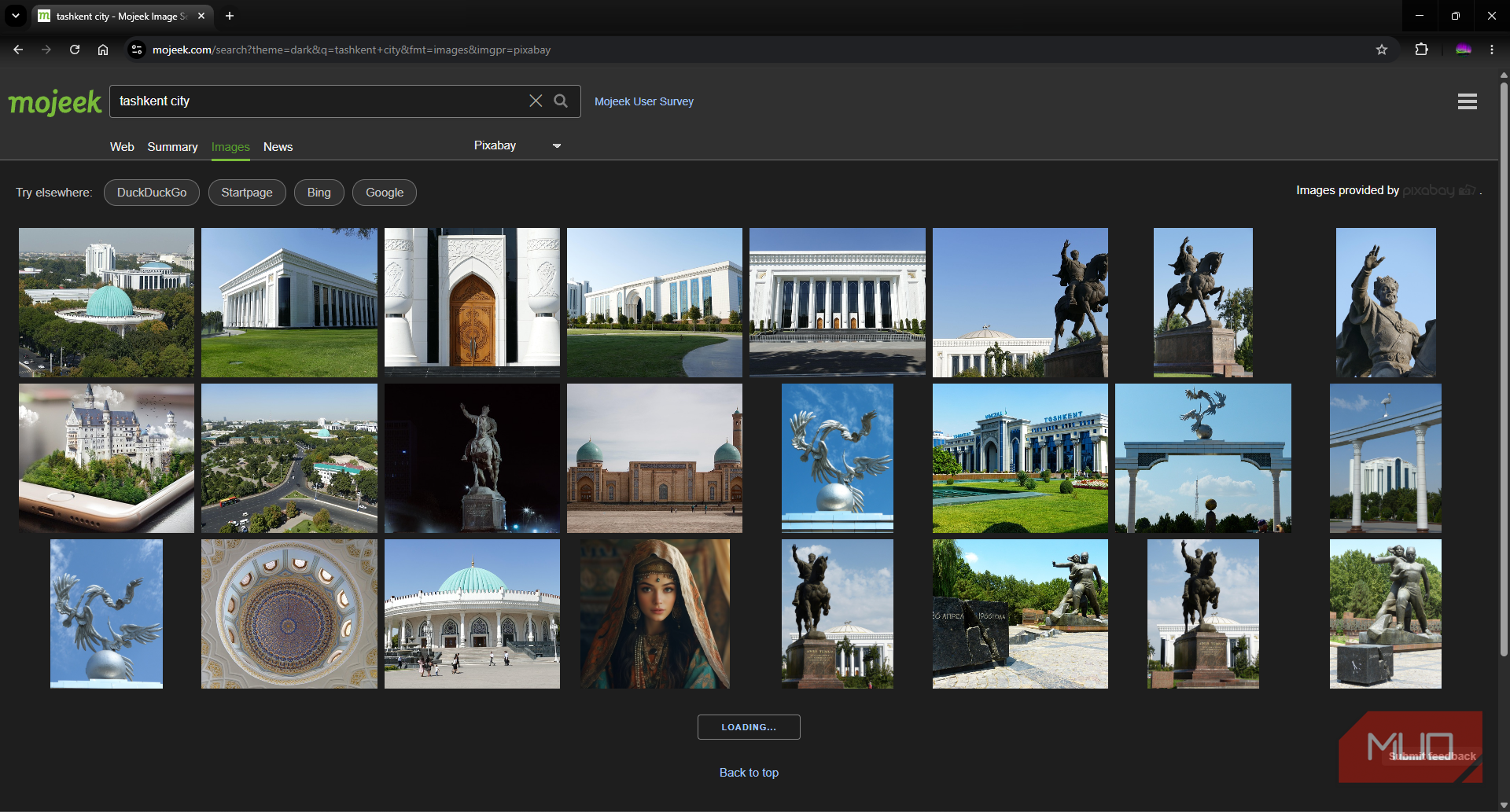
- Openly-licensed and public-domain images with Creative Commons licensing.
- Content that existed before the era of AI and results that feel prepackaged.
- Content buried deep within specific platforms, like looking for reviews within a certain site.
Rather than treating Mojeek like a normal search engine, try the Focus Templates first when you already have an idea of what you want to see.
I would not replace Google with these, but I am keeping them bookmarked
The best search engine depends on whether I want an answer or an adventure
I’m absolutely not going to pretend that these six search engines are Google killers. That’s not why I’m here. Google still wins hands down when I need an answer fast with current information and localized results. Pretending otherwise would just be dishonest.
But that’s not why I even tried them in the first place. I wanted true discovery, and that is where they made the internet feel bigger than just 10 or so platforms that hog all the search results. Marginalia and Wilby are fantastic for old web wandering. Million Short delivered results I’d otherwise never seen.
Search My Site was amazing for reading people’s personal writing, and Mwmbl gave me hope that even something as big as search engines can still be community-focused. Mojeek genuinely surprised me and was an independent search engine that actually made its way onto my bookmarks toolbar.
Google is still the undisputed king of mainstream search engines, and most platforms are fighting to be seen on it for a reason. These six search engines are better for finding what Google chooses to forget deliberately.