


Dolby Atmos elevates the music-listening and movie-watching experiences with object-based masters — these are spatial audio tracks that allow you to hear exactly where a sound is coming from with pinpoint accuracy. It's an immersive audio format, not an audio codec. The distinction matters. Dolby Atmos is akin to traditional 5.1 or 7.1 surround sound formats, and it can be delivered using a variety of codecs. Some are lossy and efficient, like Dolby Digital Plus, while others are lossless and high-quality, such as Dolby TrueHD.
Dolby Atmos is a superb way of making your audial and visual content more engaging, especially if you have specialized speakers, but it's not always lossless or hi-res. There are at least four audio codecs you might see deliver Dolby Atmos sound, including the two primary ones: Dolby Digital Plus and Dolby TrueHD. Use the wrong one, and you'll be missing out on superior quality. There are bitrate limitations of certain Dolby codecs that ensure the Atmos you enjoy on a streaming service won't match the fidelity of a Blu-ray disc.
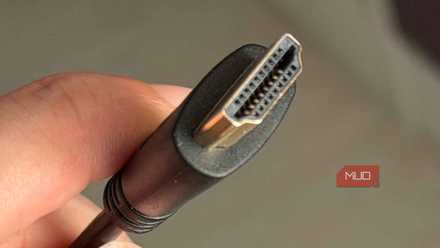
I found out I'd been listening to fake Dolby Atmos for a year — the fix was a different HDMI port
I assumed all HDMI ports were created equal, but my Dolby Atmos setup was held back by a simple connectivity mistake.
Dolby Atmos isn't a codec — it's a surround sound format
The difference is important when comparing Dolby Atmos playback quality
Think about a Dolby Atmos track like any other audio recording — forget that it's a specialized spatial audio master for a minute. A song could be encoded in MP3, but it could also be encoded in a variety of other codecs spanning AAC, OGG Vorbis, FLAC, and ALAC. All of these codecs use compression, although some use lossy compression and others use lossless compression. An AAC file delivers audio differently than a FLAC file, even if they're both based on the same source material. Dolby Atmos audio works the exact same way.
The source material, which is the original Dolby Atmos master recording created by the producer of a song or film, never changes. Only the delivery method, or the codec, varies depending on the playback source. A physical media disc might use a different Dolby codec to deliver Atmos sound than a streaming service. There are four audio codecs that are used for Dolby Atmos encoding:
- Dolby Digital Plus: An efficient audio codec with typical bitrates ranging from 384kbps to 768kbps. Streaming services use Dolby Digital Plus for Dolby Atmos, including Netflix, Apple TV, and Disney Plus. Dolby Digital Plus uses lossy compression and is an enhanced version of Dolby's AC-3 codec.
- Dolby AC-4: A "next-generation audio" codec prioritizing efficiency that delivers the same or better Dolby Atmos quality as Dolby Digital Plus at about half the bitrates. Dolby AC-4 offers binaural metadata and head tracking support while increasing spatial resolution. There are three possible Dolby AC-4 bitstreams: AC-4 IMS, AC-4 Level 3, and AC-4 Level 4.
- Dolby MAT: This codec stands for Metadata-enhanced Audio Transmission, and it's specifically designed for streaming boxes and game consoles. Dolby MAT takes uncompressed PCM audio and bundles object-based Atmos data with it. This process allows the streaming box or console to preserve resources, as it doesn't have to redundantly encode or decode lossy audio streams. The final output is then sent over HDMI to a connected TV, soundbar, or A/V receiver.
- Dolby TrueHD: A lossless, multi-channel codec carrying audio at up to 24-bit/192kHz quality. Dolby TrueHD offers bitrates up to 18Mbps, and supports up to eight channels natively. Dolby Atmos extensions bump Dolby TrueHD capabilities up to 16 discrete channels. The codec uses variable bitrate technology to adjust the amount of audio data shared per second as needed.
Although there are four kinds of Dolby codecs used for Atmos delivery, the two main ones used for music and movies are Dolby Digital Plus and Dolby TrueHD.
Dolby Digital Plus or TrueHD actually carries your spatial audio
These audio codecs are used for Dolby Atmos, but only one is lossless

So, when you see the Dolby Atmos logo next to an album or movie listing, that only tells part of the story. Atmos signifies a recording contains height data in addition to regular surround sound information, and sounds feel like they're coming from both above you and around you. It doesn't reveal the sound quality of the recording. To understand the fidelity of a Dolby Atmos track, you need to know the codec being used to deliver it.
For now, that's probably going to be Dolby Digital Plus or Dolby TrueHD. The newer Dolby AC-4 codec is on the way, with Peacock slated to become the first streaming service to offer it later this year. For now, virtually every streaming service uses Dolby Digital Plus to encode Dolby Atmos sound. The lossy compression of Dolby Digital Plus isn't ideal for quality, but the sub-1Mbps bitrates are ideal for streaming on inconsistent network connections. Since 4K video streams are already limited by bitrate, it's important that Dolby Atmos sound is delivered in an efficient manner that doesn't consume excess bandwidth.
Music streaming services like Amazon Music and Tidal use Dolby AC-4 for Atmos, while Apple Music uses Dolby Digital Plus (E-AC-3). Some users find Dolby Atmos tracks streamed using Amazon Music or Tidal to be louder and more dynamic than the same tracks streamed using Apple Music. The only difference is the codec being used, and it's the perfect real-world example of why Atmos encoding matters.
Dolby TrueHD is primarily found on Blu-ray discs, and is more commonly exclusive to 4K UHD Blu-ray releases. Physical discs aren't bound by the same bitrate limitations as streaming, so they can deliver lossless Dolby Atmos audio alongside high-resolution video. When reviewing Dolby Atmos quality, Dolby Digital Plus is good, Dolby AC-4 is better, and Dolby TrueHD best — the latter is the only lossless Atmos codec of the three.
Where you can find Dolby Atmos in Dolby TrueHD
4K UHD Blu-ray discs are the most common sources of lossless Atmos

Until Dolby AC-4 makes its way to video streaming services, the major platforms currently offer Dolby Atmos in the lossy Dolby Digital Plus. If you want to enjoy lossless Dolby TrueHD, you'll need to seek out the codec on certain Blu-ray discs. Be careful, because not every Blu-ray release includes Dolby TrueHD or Dolby Atmos audio. Many releases limit Atmos encoding in Dolby TrueHD to 4K UHD discs or to the primary language track.
Additionally, consider the setup you're using to stream Dolby Atmos content. If you're using your TV speakers or a soundbar to play back Dolby Atmos songs or movies, the lossy Dolby Digital Plus or Dolby AC-4 versions will do just fine. Those with a multi-speaker surround sound system and an Atmos-compatible A/V receiver will be better positioned to hear the difference of Dolby TrueHD compared to Dolby Digital Plus.

Sony 4K Ultra HD Blu-ray Player
- Brand
- Sony (UBPX700U)
- Ports
- Ethernet, Wi-Fi, HDMI, Coaxial
- Connectivity
- Dolby Atmos, Dolby TrueHD, DTS:X
Sony's UBPX700U 4K Ultra HD Blu-ray Player is the perfect solution for playing lossless Dolby Atmos discs. It supports Dolby Atmos, Dolby TrueHD, DTS:X surround sound modes, with HDMI and coaxial audio outputs. The player also has Dolby Vision and HDR for visuals. In addition to Blu-ray discs, this player can handle DVDs and CDs.