


The most dangerous thing about a cheap charger is that it usually works. And I also get why people buy them. If you’re looking for an extra charger for your bedside table or travel bag, it’s hard not to be tempted by one that costs half as much as the alternatives. Even if it’s a bit slower, it still feels like a bargain. But the truth is, there’s a reason why they cost so little, and it usually comes down to cost-cutting in places you can’t see.
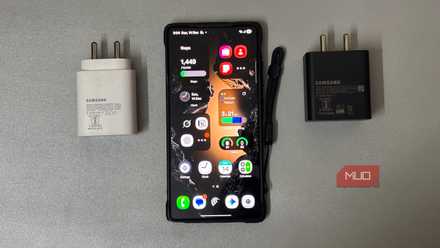
My fast charger wasn’t worth it and I wish I realized this sooner
I paid more for a change that barely mattered.
Cheap chargers cut corners you wouldn’t notice
They may look the same, but they’re not
Besides the price, one of the biggest reasons people fall for cheap chargers is because they look almost identical to reputable options. If you put one next to a charger from Anker or UGREEN, most people wouldn’t be able to tell which costs $10 and which costs five times as much. They’ll both have the same USB-C ports and all the fast-charging buzzwords on the packaging, so you have little reason to doubt them.
The problem is that you’re only seeing the part that’s meant to be seen. The real differences are on the inside. For starters, reputable manufacturers pay for certifications that most of us never think about. Independent safety certifications, like UL testing and USB-IF compliance, aren’t just fancy logos printed on a box. They actually mean something. They assure you that a charger meets the necessary electrical safety standards. Cheap chargers often skip these certifications entirely, which is a serious problem from a safety standpoint.

Most of the cost-cutting, however, happens at the component level. For instance, these chargers tend to rely on lower-quality capacitors and simplified filtering circuits to save cost. These parts are responsible for keeping power clean and stable, and cutting corners here causes problems like higher ripple current.
Heat is another problem. Most premium chargers use better thermal materials and PCB designs that help spread heat efficiently. Cheap chargers often do the bare minimum in this area, which causes them to run noticeably hotter at times. Finally, cheap chargers also don’t care for the modern charging tech. For instance, most phones these days support PPS (Programmable Power Supply). It’s a charging standard that lets the charger and phone constantly talk to each other and adjust voltage depending on the device’s requirements.
But since implementing PPS requires additional hardware and testing, you’re unlikely to find it in a cheap charger. So yes, even though a cheap charger may look nearly identical on the outside, it’s usually built very differently on the inside.
Your expensive phone deserves a decent adapter
You can save money on other accessories

The good news is that most modern phones are pretty good at protecting themselves, so even if you plug in a cheap charger, they don’t blindly accept whatever power it delivers. For instance, my Galaxy S26 tops out at 25W charging. So even if I plug it into a cheap 60W or a 100W charger, it’ll still draw only 25W from it.
That doesn’t mean it’s safe to use, though. Cheap chargers can still fail and cause a lot of damage. You’ll find plenty of stories on Reddit about overheating chargers, scorched cables, melted connectors, and damaged outlets caused by low-quality chargers or USB cables. Sure, these incidents are quite rare, but you still wouldn’t want to take that chance.
It’s bad enough that most phones these days don’t come with a charging adapter. But the worst thing you can do is hunt for the cheapest charger after spending hundreds of dollars on a phone. A charger is something that spends hours handling electricity while you’re asleep or not paying attention. When you look at it that way, spending an extra $15 or $20 on a charger isn’t overspending. It feels like common sense.
Buying a good charger isn’t too difficult
I know buying a charger is more confusing than ever, but most of the time, you just need to stick to the basics. The most obvious rule is to stick with reputable brands like Anker, Belkin, UGREEN, Samsung, and Apple. Of course, it’s just as important to buy a charger from a reputable retailer or seller.
Second, make sure that the charger is capable of providing the maximum wattage your phone supports, so it doesn’t take hours to charge. That said, there’s no reason to buy a 100W charger if your phone can only accept 25W or 45W. You should only really do that if you want to future-proof your purchase. Finally, if you can find a GaN charger for your phone, even better. They’re typically more efficient, lightweight, and faster than regular chargers.
All of this doesn’t mean you need to go for the most expensive charger on the shelf. As long as you stick to a reputable brand and choose the correct wattage, you’ll be fine.
